


Go back to Blog


Jennifer Edidiong
Marketing
12 min read
Share to
AML Transaction Monitoring Software for Crypto
In 2024, owners of ByBit, KuCoin, and other crypto exchanges in Nigeria woke up to find over ₦548 million in their accounts frozen by court order. The issue? Regulators suspected the funds were linked to money laundering and unmonitored foreign exchange activity. This led to frustrated users and founders suddenly battling regulatory fallout they hadn’t prepared for.
As a crypto founder or compliance lead, this could just as easily be your story if you don’t have the right safeguards in place.
AML transaction monitoring for crypto is how you track transactions to spot suspicious activity on your platform before it escalates and stay ahead of fraudsters. Spotting fraud risks early helps you avoid potential financial losses that could disrupt your platform. In short, you need monitoring to keep your business secure and your users’ trust intact.
Now that you know what’s at stake, this guide will explain how crypto AML transaction monitoring works, the features to look for, and how to choose the right solution for your business.
Let’s get started.
TL;DR
- What is AML transaction monitoring for crypto?
- Why crypto platforms need AML monitoring.
- How crypto AML software works
- Key features of crypto AML compliance software.
- How to choose AML monitoring software.
- Dojah’s Transaction Monitoring solution
What is AML Transaction Monitoring for Crypto?
AML (Anti-Money Laundering) transaction monitoring for crypto is the process of tracking blockchain transactions to detect suspicious activity and stay compliant with regulations. Think of it as a security system for your platform: it not only records transfers but also flags high-risk wallets, unusual flows, and potential misuse of cryptocurrencies.
This matters because crypto moves quickly. Funds can jump across wallets and borders in seconds, making it attractive to fraudsters and money launderers. Without monitoring, your platform risks fines, reputational damage, or even license suspension
Traditional AML Monitoring vs Blockchain-Based Monitoring
Here’s how monitoring works in traditional finance compared to crypto:
- Identity vs. Address: In a bank, your transaction is always tied to your verified name and ID. While in crypto, transactions are tied to wallet addresses that don’t show who’s behind them.
- Closed vs. Open Systems: Banks operate in closed systems where transfers stay within their network. Crypto runs on public blockchains that anyone can see, which adds both transparency and complexity to the process.
- Data Visibility: In banking, only your bank and regulators see your transfers. In crypto, the entire history of a transaction is public but hidden behind pseudonyms, making it harder to link funds back to real people.
- Complexity of Risks: Banks usually deal with known fraud patterns. Crypto platforms face newer risks such as mixers, privacy coins, and cross-chain transfers that are designed to obscure activity.
Related: Learn how KYC in Crypto works
Compliance Rules Driving the Need for Crypto Transaction Monitoring
Crypto transaction monitoring is guided by several global and local regulations. These mainly include:
1. FATF Travel Rule
The Financial Action Task Force (FATF) requires exchanges to share key details of senders and receivers for crypto transactions above certain thresholds. Monitoring tools help automate the collection and transfer of this data. Without it, platforms risk fines or being cut off from international partners.
2. EU AMLD regulations
The EU’s Anti-Money Laundering Directives (AMLD) set strict requirements for crypto service providers operating in Europe. These include customer due diligence, transaction monitoring, and reporting suspicious activity. Compliance ensures platforms can operate legally across member states.
3. FinCEN guidelines
In the US, the Financial Crimes Enforcement Network (FinCEN) treats crypto exchanges as money service businesses. This means they must register, monitor transactions, and file suspicious activity reports (SARs). Ignoring FinCEN rules can lead to heavy penalties and even criminal charges.
4. Country-specific crypto AML laws
Different regions also have their own requirements, so platforms must adapt to each market they enter:
- Nigeria: Exchanges must follow CBN and SEC directives, focusing on KYC and monitoring to curb fraud.
- Ghana: The Bank of Ghana is working on stricter AML measures for digital assets to prevent illicit flows.
- Kenya: Regulators are tightening oversight, with requirements for licensing and detailed transaction reporting.
- United States: Beyond FinCEN, states have their own licensing and AML rules that exchanges must meet.
- Canada: Platforms must register with FINTRAC and comply with detailed AML and reporting requirements.
Also see: How to choose the right transaction monitoring tool for your fintech
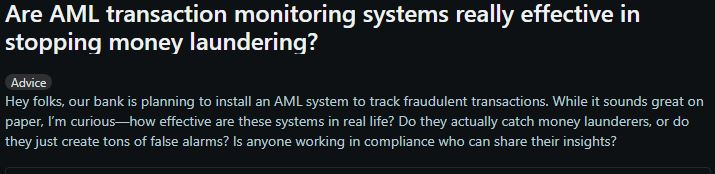
On Reddit, some bank and crypto founders usually share their uncertainty about AML transaction monitoring systems. They want to understand how it works and if it can actually help protect their platform and users, which is exactly what we’ll break down next.
How AML Transaction Monitoring Works in Crypto.
Here’s a quick behind-the-scenes look at how crypto transaction monitoring works on your platform:
1. On-chain data analysis
This is where monitoring starts. Every transaction on the blockchain leaves a digital trail, and platforms analyze this on-chain data to understand where funds are coming from and where they’re headed. It’s like checking footprints in the sand — the details tell you if the movement looks safe or suspicious.
2. KYT (Know Your Transaction) checks.
Just like banks use KYC (Know Your Customer) to verify people, crypto platforms use KYT to verify transactions. Each transfer is checked for things like origin, destination, and context, helping you spot if a wallet is linked to shady activity before the money even moves.
3. Sanctions and PEP screening
Your platform also screens wallet addresses against global sanctions lists and databases of PEP ( politically exposed persons). This ensures you’re not processing funds tied to blacklisted individuals, organizations, or high-risk figures. It’s the compliance guardrail that saves you from heavy fines.
4. Suspicious activity pattern recognition
This is where advanced tools look for unusual behaviors like sudden large transfers, rapid movements across multiple wallets, or the use of mixers and privacy coins to mask funds. These patterns raise red flags that signal potential money laundering.
5. Risk scoring of wallets and addresses
Finally, every wallet or address is given a risk score based on its history and activity. Low scores mean normal usage, while higher scores warn that the address could be linked to fraud, sanctions, or other high-risk behavior. This makes it easier for compliance teams to prioritize which cases need closer review.
Key Features to Look for in Crypto AML Software
After understanding how AML monitoring works, the next step is knowing what features actually make a crypto AML software effective. Here are the must-haves to look out for:
1. Real-time monitoring and alert
Crypto moves fast, so your AML software should be able to track transactions instantly. Real-time alerts help you spot and respond to suspicious activity before funds slip away or compliance issues pile up.
2. Multi-chain coverage
Not all activity happens on one blockchain. A strong solution can monitor across multiple chains, so whether funds move on Bitcoin, Ethereum, or smaller networks, you still get full visibility.
3. FATF Travel Rule compliance support
The Financial Action Task Force (FATF) requires certain information from people who wish to travel with crypto transactions. Good AML software makes this easier by helping you collect, share, and verify sender and receiver details in line with the rule.
4. Integration with existing KYC systems
AML doesn’t work in isolation. The best tools plug seamlessly into your KYC setup, connecting identity checks with transaction data to give you a fuller picture of who’s moving money on your platform.
5. AI/ML-driven fraud detection
Fraudsters are always finding new tricks, which makes AI and machine learning essential. These features allow the software to learn from past patterns and flag unusual behavior that rules-based systems might miss.
6. Case management and reporting tools
Spotting suspicious activity is only step one. A good AML tool also helps you manage investigations, keep detailed records, and generate reports that regulators will expect to see during audits.
How to Choose the Right Crypto AML Transaction Monitoring Software
Aside from features, choosing the right AML transaction monitoring software comes down to how well it fits your platform. Here are key factors to consider before deciding:
1. Compliance coverage vs regional requirements
Regulations don’t look the same everywhere. For instance, if you’re operating in Nigeria and planning to launch in Kenya, you’ll need to meet both countries’ AML requirements alongside FATF standards. The right software should cover global frameworks while also adapting to local rules in each region.
2. API flexibility
Your AML solution shouldn’t feel like a burden to integrate. Look for flexible APIs that connect smoothly with your wallet, exchange, or KYC tools. This way, whether you’re adding new blockchains or scaling into new markets, the system grows with you.
3. Startup-friendly pricing
For most crypto platforms, budgets are tight in the early stages, so affordability matters. Look for tools that offer flexible pricing plans while still giving you the core features you need to monitor risk effectively. This way, your platform can scale securely without breaking the bank.
4. Verification accuracy
False positives happen when legitimate transactions are flagged as suspicious. If this occurs too often, your compliance team spends time chasing fake alerts instead of real risks. You need software accurate enough to minimize noise and keep investigations focused.
5. Technical support
Technical difficulties would most likely come up, especially with changing regulations or new blockchains. Reliable vendor support means speedy assistance with API errors, updates, or compliance questions. This makes the difference between a quick fix and days of downtime.
Related: Processes & challenges of AML transaction monitoring rules
Dojah’s Transaction Monitoring Solution
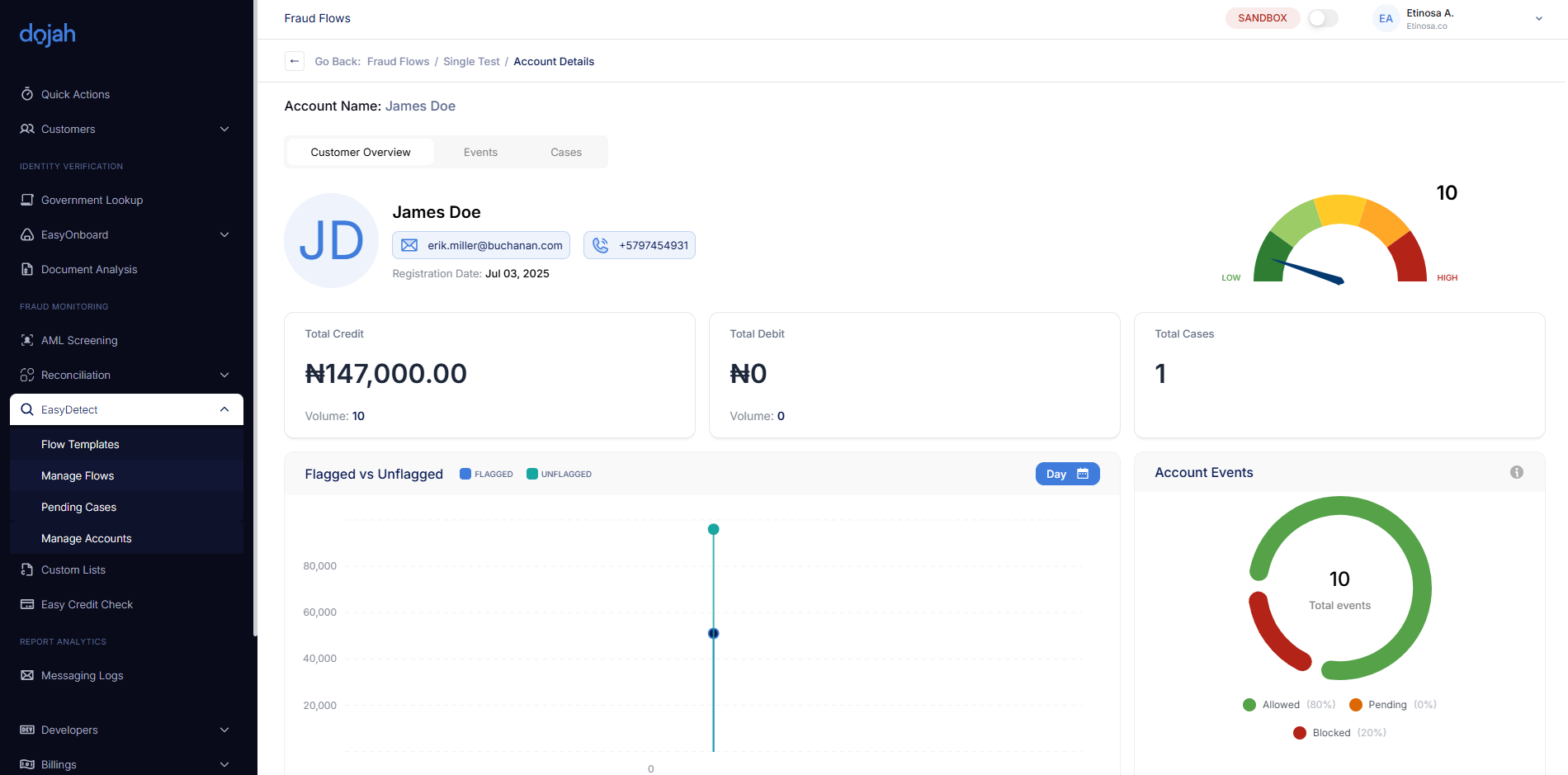
The challenges above highlight why crypto businesses need a reliable AML monitoring system. Dojah’s EasyDetect brings fraud prevention and crypto transaction monitoring together in one solution. Here’s what you get:
1. Accuracy you can trust
With EasyDetect, you get up to 99.9% verification accuracy for crypto transactions and customer checks. That means your alerts are based on clean, reliable blockchain and user data, not guesswork. Your compliance team can focus on actual risks instead of dealing with false positives.
2. Real-time detection
In crypto, speed is everything. Dojah’s EasyDetect reviews transactions in real-time, flagging suspicious activity the moment it happens. With instant alerts, you can stop fraud before it damages your platform or puts you at regulatory risk.
3. Flexible rule management
Every crypto exchange and wallet has unique compliance needs. Our system lets you create and adjust monitoring rules for high-risk tokens, large-volume transfers, repeated suspicious trades, or region-specific AML requirements. This flexibility gives you control without having to rebuild processes.
4. Pre-built flow templates
We designed our pre-built monitoring templates to cover common crypto AML use cases. Whether it’s detecting wash trading, unusual wallet activity, or cross-border transfers, your team can start monitoring from day one with no time wasted setting up workflows.
5. Seamless integration with identity verification
Crypto transaction monitoring works best when paired with strong KYC. EasyDetect connects directly with our identity verification tools, giving you a full picture of who your customers are and how they move funds. This combined approach improves fraud detection and keeps you ahead of compliance checks.
6. Unique reporting system
Regulators require accurate, timely reporting. EasyDetect helps you generate and manage documents like Suspicious Transaction Reports (STRs) and AML compliance logs for crypto transactions with ease. With reliable data at hand, your team saves time while staying fully compliant.
See how Dojah helped ZendWallet cut fraud risks and build user trust in crypto.
Keeping Your Crypto Platform Secure
In crypto, a single suspicious transaction can trigger major fines or reputational damage. AML monitoring helps you spot risks early, protect your users and keep your platform running smoothly. Acting before issues escalate is the difference between a safe platform and costly disruptions.
Dojah’s EasyDetect makes this simple with real-time alerts and intelligent risk detection, so you can focus on growing your crypto business instead of chasing threats. Trusted by leading fintechs and platforms across Africa, it helps you stay secure in a fast-moving market.
Book a demo today to see how Dojah can safeguard your crypto platform
FAQs on Crypto AML Transaction Monitoring
1. Why does my crypto platform need AML transaction monitoring?
It helps you spot suspicious transactions early, stay compliant, and protect your users and business from fraud or regulatory fines.
2. How does AML transaction monitoring work in crypto?
It tracks wallet activity, analyzes on-chain data, and screens transactions against sanctions and KYT checks. Alerts are generated in real time so your team can act fast.
3. What features should I look for in crypto AML software?
Real-time monitoring, multi-chain support, KYT integration, AI fraud detection, and reporting tools are essential for catching risks while keeping your workflow smooth.
4. Can AML monitoring prevent my platform from being exploited by fraudsters?
Yes. It flags unusual patterns like rapid transfers or mixer activity, helping you stop fraud before it affects users or reputation.
5. How accurate are crypto AML tools?
Top tools minimize false positives while reliably flagging real risks, so your compliance team focuses on actionable alerts.
6. How can AML monitoring help me expand to new markets in Africa?
It ensures your platform meets local crypto regulations, from Nigeria to Kenya or Ghana, letting you scale safely and build trust with users across borders.
Start using Dojah for all your business needs


