


Go back to Blog


Jennifer Edidiong
Marketing
7 min read
Share to
Understanding Behavioural Signals to Prevent Digital Fraud
Fraudsters can fake IDs and even create convincing deepfakes, but the way users behave online often tells the real story. While identity checks help verify who someone claims to be, they don’t always reveal if that person is genuinely who they say they are.
Digital businesses relying only on static checks can miss sophisticated fraud attempts. Hackers may log in with stolen credentials or create synthetic accounts that appear legitimate, slipping past traditional verification methods. This leaves your platform and users vulnerable to account takeovers, payment fraud, and other threats.
This article guides you through what behavioural signals are, how they differ from identity signals, why they’re hard for fraudsters to mimic, and how tools like Profiled Risk can help you track and respond to suspicious activity in real time.
What Are Behavioural Signals?
Behavioural signals are patterns in how users interact with your platform: things like login times, typing speed, navigation habits, mouse movements, and device switching. They’re observations of actual behaviour, not just the identity someone claims to have. These signals help you see how a user behaves over time, revealing patterns that are difficult for fraudsters to mimic.
For example, a fraudster might log in using stolen credentials, but their behaviour, maybe they navigate differently, type unusually fast, or switch devices in odd ways, can trigger red flags. By monitoring these subtle cues, businesses can detect suspicious activity early and prevent fraud before it impacts customers or operations.
Behavioural Signals vs Identity Signals
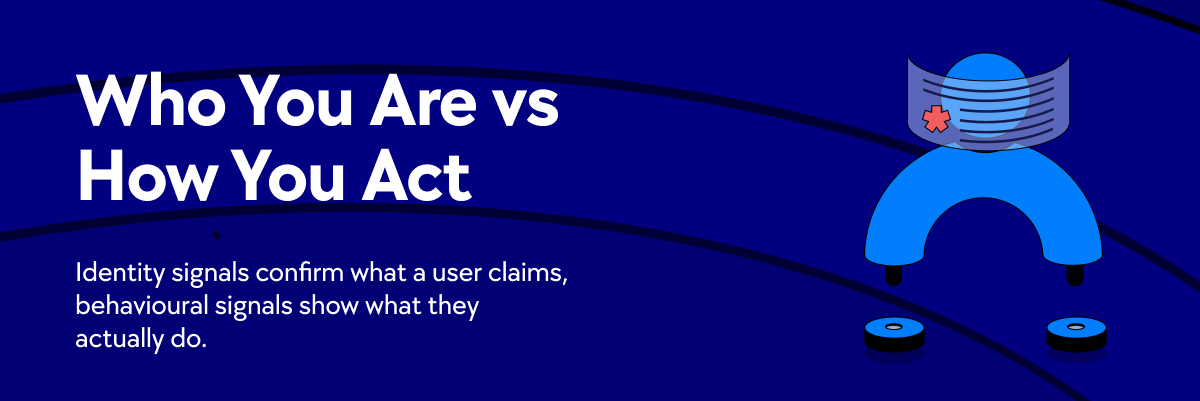
While identity signals tell you who a user claims to be, behavioural signals show how that user actually behaves on your platform. Both are important, but they serve different purposes. Identity signals are static and easy to verify once; behavioural signals are dynamic and reveal patterns over time, making them harder for fraudsters to fake.
Identity signals include things like a user’s name, email, phone number, government ID, or biometrics. They confirm “who you say you are.” Behavioural signals, on the other hand, track interactions like typing speed, navigation paths, login times, and device usage, helping confirm “if you act like yourself.” Two users might share the same identity signals, but only one may behave consistently over time; this difference is what makes behavioural monitoring an essential layer of security for digital businesses.
Comparison Table
Feature | Identity Signals | Behavioural Signals |
| What it verifies | Who the user claims to be | How the user behaves on the platform |
| Examples | Name, email, phone, government ID, biometrics | Typing speed, navigation patterns, mouse movement, device usage |
| Ease for fraudsters to fake | Relatively easy (can steal credentials or documents) | Difficult (hard to mimic natural behaviour) |
| Purpose | Initial verification | Continuous monitoring, fraud detection |
Why Behavioural Signals Are Difficult for Fraudsters to Fake

Behavioural signals are patterns in how users interact with your platform, and unlike names or IDs, they are not easy to mimic. Here are a few examples of how behavioural signals work:
1. Timing Patterns
The times your users usually log in or perform actions are often consistent. If you notice activity outside normal hours or a sudden spike in unusual login times, it can be a sign that someone is trying to take over an account. For instance, a login at 3 a.m. from a user who is usually active in the evening is worth checking.
2. Device Usage
Your users generally access your platform from a few trusted devices and locations. When someone suddenly switches devices or logs in from multiple locations in a short period, it can indicate unauthorized access. Paying attention to this helps you catch fraudsters who have stolen credentials but cannot replicate your user’s normal device behaviour.
3. Navigation and Interaction
How users click, scroll, or move through your platform is unique and consistent. Sudden changes in navigation flow or skipping expected steps can signal fraudulent activity. For example, a user moving randomly across pages instead of following their usual path is suspicious.
4. Input Behaviour
Even the way users type or fill forms is a behavioural signal you can track. Inconsistent typing speed, unusual errors, or patterns that do not match previous activity can reveal fraud attempts. Keeping an eye on these small details helps you protect your platform without affecting genuine users.
When you combine these signals, you gain a clear picture of what normal behaviour looks like. This makes it much harder for fraudsters to hide and gives your team the chance to act quickly.
What This Means for Your Business
If you run a digital business, here’s why behavioural signals matter:
1. You catch fraud earlier, before losses happen
Behavioural signals allow you to spot suspicious activity as it unfolds, not after damage is done. Subtle changes in login behaviour, navigation patterns, or device usage can flag account takeovers and synthetic fraud early. This gives your team time to act before transactions are approved or accounts are compromised.
2. You reduce fraud without hurting genuine users
Blocking users too aggressively leads to friction, drop-offs, and lost revenue. Behavioural monitoring helps you distinguish risky behaviour from normal activity, so legitimate customers aren’t interrupted unnecessarily. The result is stronger security without sacrificing user experience.
3. You gain better visibility across user activity
Instead of reviewing isolated alerts, behavioural signals provide context across sessions, devices, and actions. This makes investigations faster and more accurate for fraud and risk teams. With clearer patterns, your team spends less time chasing false positives and more time stopping real threats.
4. You build a more resilient fraud strategy as you scale
As your platform grows, fraud attempts become more frequent and more complex. Behavioural signals adapt over time, helping your detection strategy evolve alongside your business. This ensures your fraud controls remain effective even as transaction volumes, user bases, and attack methods increase.
How Profiled Risk Uses Behavioural Signals
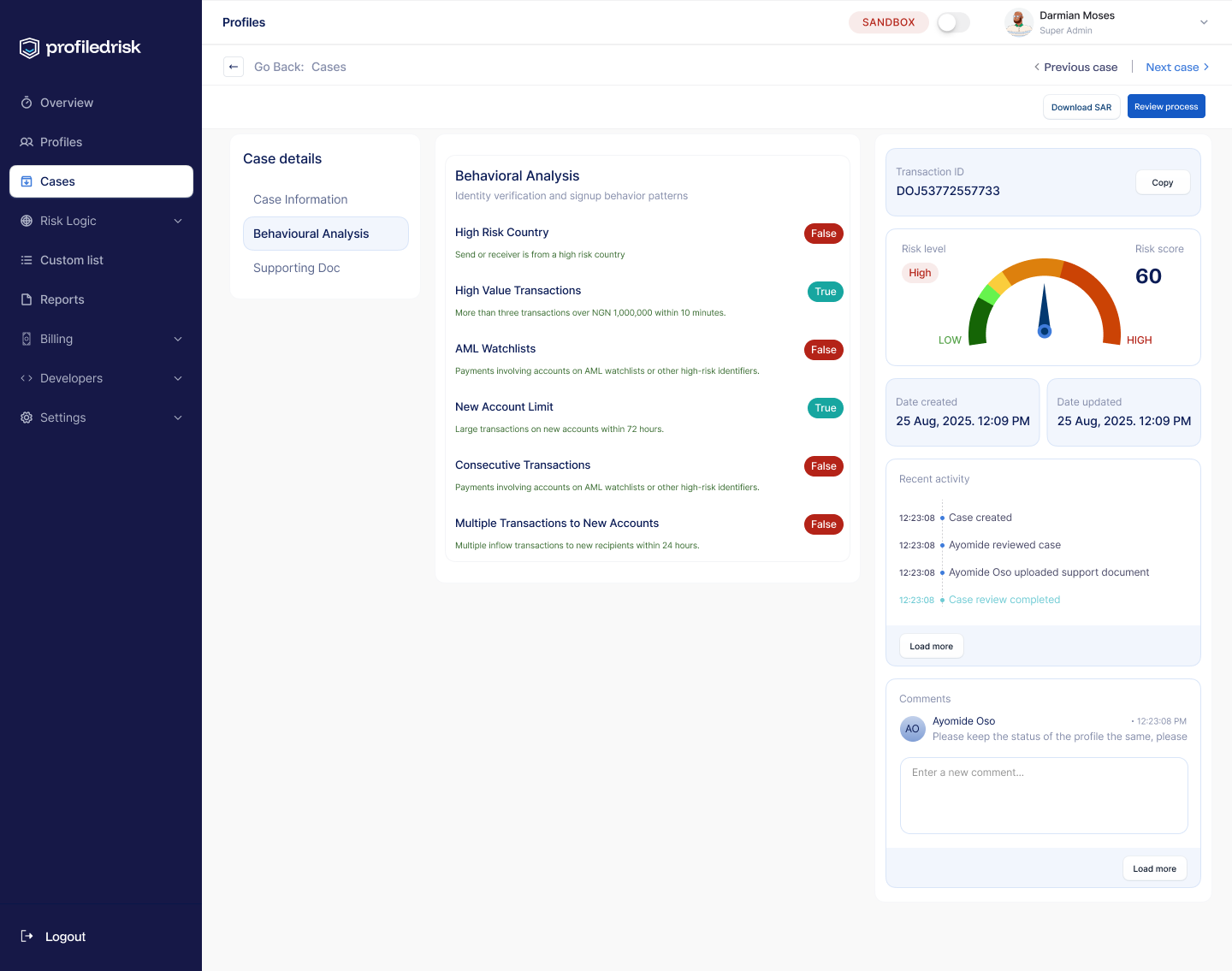
With Dojah’s Profiled Risk, you can detect and monitor the behavioural signals of your users over time. Here are the core features that help you track user behaviour on your platform:
1. Unified Risk Profiles
Profiled Risk combines all the data points you have on a user into a single risk profile. This means you can see their behaviour across multiple sessions and interactions, giving your team a complete picture instead of fragmented alerts. With a unified view, spotting anomalies becomes faster and more accurate, so you don’t miss hidden threats.
2. Connected Fraud Signals
The system links suspicious activities across users, devices, and accounts. For example, if one account shows unusual navigation patterns and is connected to a new device used by another risky account, you get the full context immediately. This lets your team detect coordinated fraud that would be invisible in isolated checks.
3. Real-Time Alerts
Profiled Risk notifies you instantly when behaviour looks off, such as a rapid sequence of logins from different locations or unusual purchase patterns. You can act immediately to block or verify actions, preventing fraud before it affects your users or revenue. Real-time visibility keeps your operations secure without interrupting normal traffic.
4. Custom Risk Scoring
You can tailor risk scores to your platform and business model, weighting the signals that matter most. This means you prioritize high-risk activity while reducing false positives, so legitimate users aren’t inconvenienced. Over time, your scoring adapts, making fraud detection smarter as your platform grows.
Stay Ahead of Fraud with Behavioural Signals on Profiled Risk
Fraud is evolving rapidly, and traditional identity checks alone are insufficient to keep your platform secure. Monitoring behavioural signals gives you real insight into how users interact with your platform, helping you spot suspicious activity before it turns into financial loss or account takeovers. By understanding patterns in login behaviour, navigation, device usage, and more, your team can act faster and protect your business.
With Dojah’s Profiled Risk, your team can track these behavioural signals in real time, connect multiple fraud indicators, and score risk intelligently. This means faster detection and reduced losses, while keeping your operations secure and scalable.
Book a demo today to see how Profiled Risk can help you monitor behavioural signals on your platform.
Start using Dojah for all your business needs


