


Go back to Blog


Jennifer Edidiong
Marketing
9 min read
Share to
How to Reduce Customer Onboarding Drop-Off Using Identity Verification

A user downloads your app and begins signing up, entering their name, email, and other details. But midway through onboarding, they hesitate, abandon the process, and never return. This is the prevalent case of customer drop-off during onboarding that most fintechs, banks, and digital platforms face today.
Globally, roughly 70% of banks lose new customers due to slow and complex onboarding flows. In Africa, where KYC regulations are stringent and mobile connectivity can vary, drop-off at the verification stage is even more pronounced, often reaching 40–50%. This means millions of potential users never complete onboarding.
To improve conversion, your onboarding process needs to be seamless and reliable for your users. In this guide, you’ll learn practical steps to reduce customer drop-off with friction-free onboarding while improving overall completion rates.
Why Users Drop Off During Customer Onboarding
There are several factors that cause users to abandon the onboarding process. While the exact triggers may vary across industries and regions, certain friction points remain consistent:
1. Long and Complex KYC Processes
KYC checks are required by government regulations, but if poorly implemented, onboarding feels long and overwhelming. This happens when verification steps are repetitive or too many credentials are requested upfront, before users see the value of completing the process. In banking, which has the highest onboarding churn globally, roughly 1 in 4 new customers drop off, while in crypto, over 70% abandon due to slow and complex verification flows.
2. Technical Friction and Poor Mobile Optimization
Slow uploads, unreadable ID scans, or camera failures can instantly break momentum when a user is about to sign up. In Africa, where over 80% of onboarding happens on mobile devices, often under inconsistent network conditions, even one failed upload or repeated “try again” prompt can significantly increase frustration. This, in turn, leads to lower completion rates and higher abandonment
3. User Confusion and Lack of Feedback
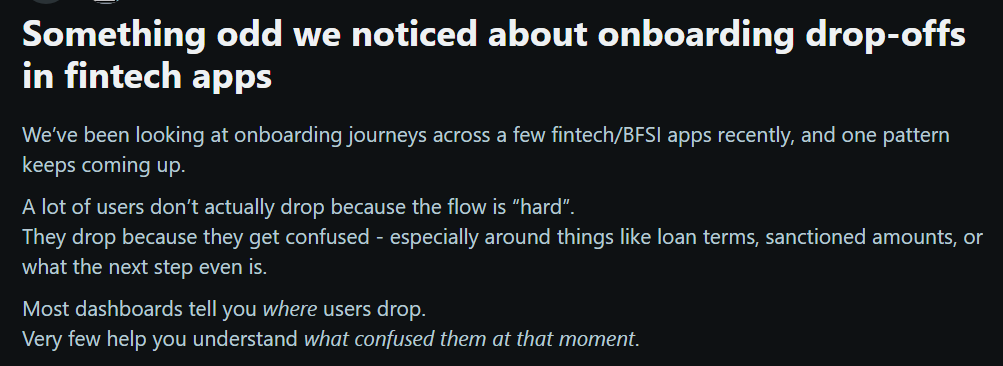
Users often quit not because a step is inherently difficult, but because it is unclear. On Reddit, a fintech product manager once shared that many drop-offs occur when users are unsure about app terms or the next step in the onboarding process. When the system goes silent or slows down after a document upload or verification check, users are left guessing, and that uncertainty often pushes them to abandon the process altogether.
4. Trust and Verification Anxiety
Onboarding requires users to share sensitive personal and financial information, which naturally creates caution. A 2024 study found that 53% of users abandoned signup because they felt uncomfortable with the identity verification process. If your verification flow doesn’t make users feel secure through unexplained delays, unclear errors, or rigid security prompts, they may hesitate to trust your platform.
The Cost of High Customer Drop-Off During Onboarding
High onboarding drop-off does more than reduce signup completion. It quietly slows growth and prevents businesses from converting interested users into active customers.
The impact of onboarding drop-off often shows up in several ways:
- Lost customer lifetime value (LTV)
Every user who abandons onboarding represents potential revenue that never materializes. If a large percentage of users drop off before activation, the long-term value those users could generate is lost. - Wasted customer acquisition spend
Businesses spend heavily on marketing to bring users to their signup pages. When onboarding friction causes users to abandon the process, that acquisition cost is wasted before the customer even experiences the product. - Lower activation and monthly active users
If a significant percentage of users drop off during identity verification or signup, the number of activated users declines. This directly affects monthly active users and slows product growth. - Delayed revenue and slower scaling
When onboarding completion rates are low, businesses take longer to convert new users into paying customers. Over time, this slows overall growth and makes it harder to scale efficiently.
7 Key Steps to Reduce Drop-Off Through Effective Identity Verification

When designed thoughtfully, identity verification can reduce onboarding friction while still meeting regulatory requirements. Here are seven practical ways fintech and digital platforms can reduce drop-off during onboarding:
1. Tiered Verification (Minimal Upfront Information)
Start with only the essential information required to create an account, then request additional verification later as users engage more with the product. This reduces early friction and allows users to experience the value of your platform before completing full KYC. Tiered verification keeps the first interaction simple while still ensuring compliance as user activity increases.
2. Automated Real-Time Verification
Delays during verification are a major reason users abandon onboarding. Automated identity checks using AI, biometric selfies, and OCR-based document scanning allow IDs to be validated instantly instead of waiting for manual review. Faster verification keeps momentum during signup and significantly improves completion rates.
3. User-Friendly Guided Document Capture
Many verification failures occur because users are unsure how to properly submit documents or selfies. Clear instructions, visual prompts, and real-time feedback help users capture valid ID images on the first attempt. Reducing repeated uploads or failed submissions removes one of the most common causes of onboarding drop-off.
4. Adaptive Risk-Based Verification
Not every user needs the same level of verification at the same stage. Risk-based verification adjusts the depth of checks based on factors such as transaction size, account activity, or user risk profile. Industry best practices from Stripe highlight tiered and adaptive verification as an effective way to reduce friction while maintaining compliance.
5. Progress Feedback and Trust Signals
Users are more likely to complete verification when they understand what is happening and why information is required. Showing step-by-step progress indicators that briefly explaining verification requirements, such as “Make sure your ID is fully visible” or “This helps keep your account secure,” helps build confidence in the process. When users feel informed and reassured, they are far less likely to abandon onboarding.
6. Mobile-First Verification Channels
In many African markets, onboarding happens primarily on mobile devices, often under unstable network conditions. Providing alternative channels such as SMS, USSD, or WhatsApp for certain verification steps can help users complete onboarding without relying entirely on data-heavy mobile apps. Allowing users to verify identity through familiar channels reduces friction and improves completion rates.
7. Measure and Improve Verification Performance
Reducing drop-off requires continuous monitoring of how users move through the verification process. Tracking metrics such as step completion rates, retries, and verification failures helps teams identify where users abandon onboarding. In one survey, only 22 percent of banks offered a save-and-resume option during onboarding, highlighting how many institutions still lack basic completion tools that could improve user retention.
How Dojah Supports Seamless Identity Verification at Onboarding
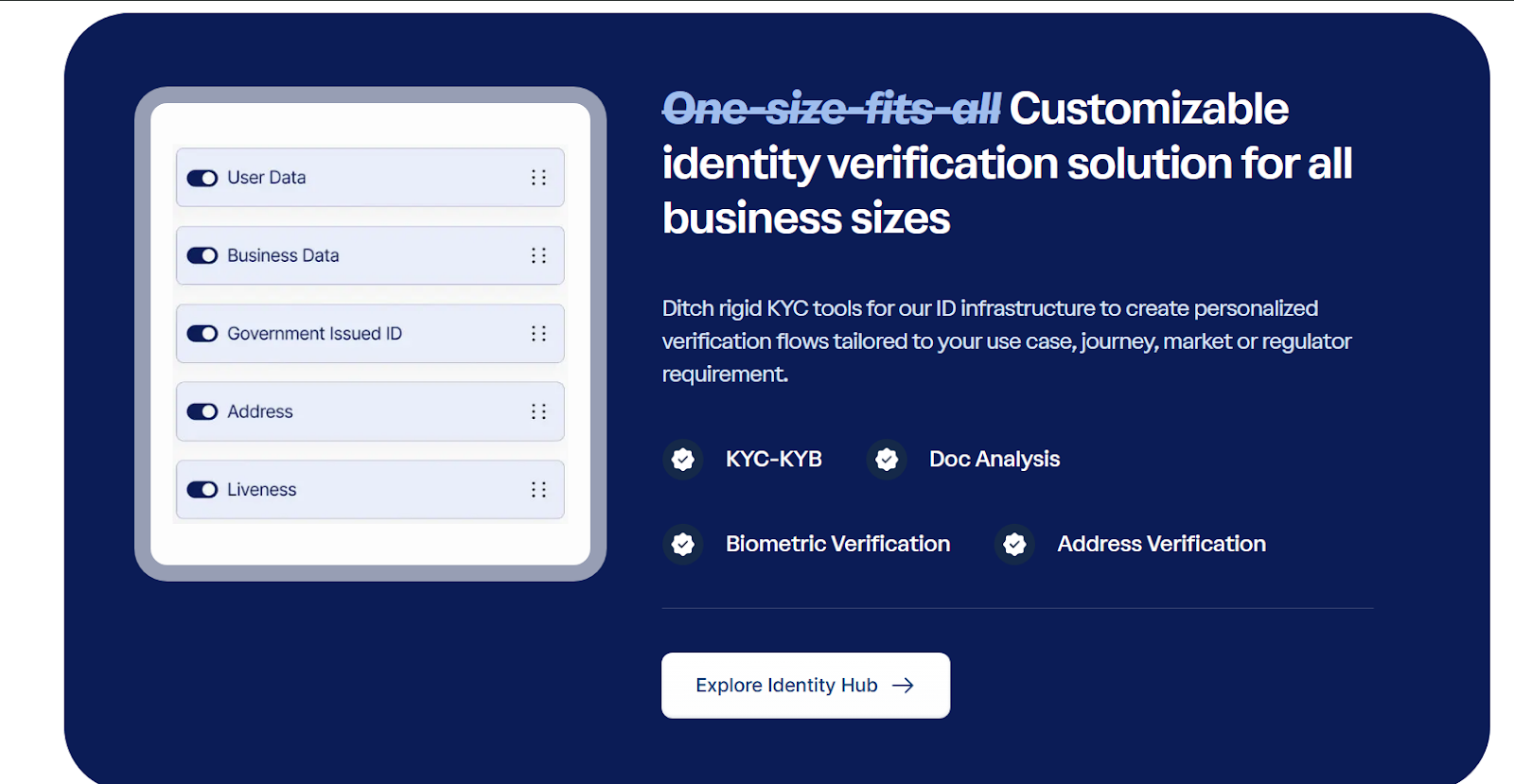
Finding an identity verification platform that enables seamless onboarding can be challenging. Dojah helps simplify the process by combining fast verification, accurate identity data, and visibility into where users drop off. Here is how Dojah helps you simplify customer onboarding:
1. Automated Real-Time Identity Verification
Dojah verifies user identities instantly using automated document checks and OCR-based validation, removing delays that often come with manual review. The platform supports over 3,000 document types across 150+ countries and can complete verification checks in as little as 30 to 60 seconds. Faster verification keeps users moving through signup and reduces drop-offs caused by long waiting times.
2. Biometric Selfie and Liveness Checks
Dojah supports selfie verification and liveness detection to confirm that the person submitting the document is the rightful owner. These biometric checks happen instantly during onboarding, helping you prevent fraud without slowing down the experience. Your users can complete identity confirmation in seconds without complex steps or repeated retries.
3. High Data Accuracy Across African Markets
Dojah connects directly with trusted government-backed identity data sources across multiple African markets. This allows you to verify user identities against reliable national databases with high accuracy. As a result, your onboarding process remains compliant while maintaining confidence in every verification decision.
4. Multi-Channel Verification for Mobile-First Users
In regions where mobile connectivity can vary, Dojah supports verification across multiple channels, such as WhatsApp, SMS, and USSD, to keep onboarding accessible. Your users can complete verification through mobile-friendly flows designed to work even under low-bandwidth conditions. This ensures more users can successfully finish onboarding without being blocked by technical limitations.
5. Verification Analytics and Drop-Off Insights
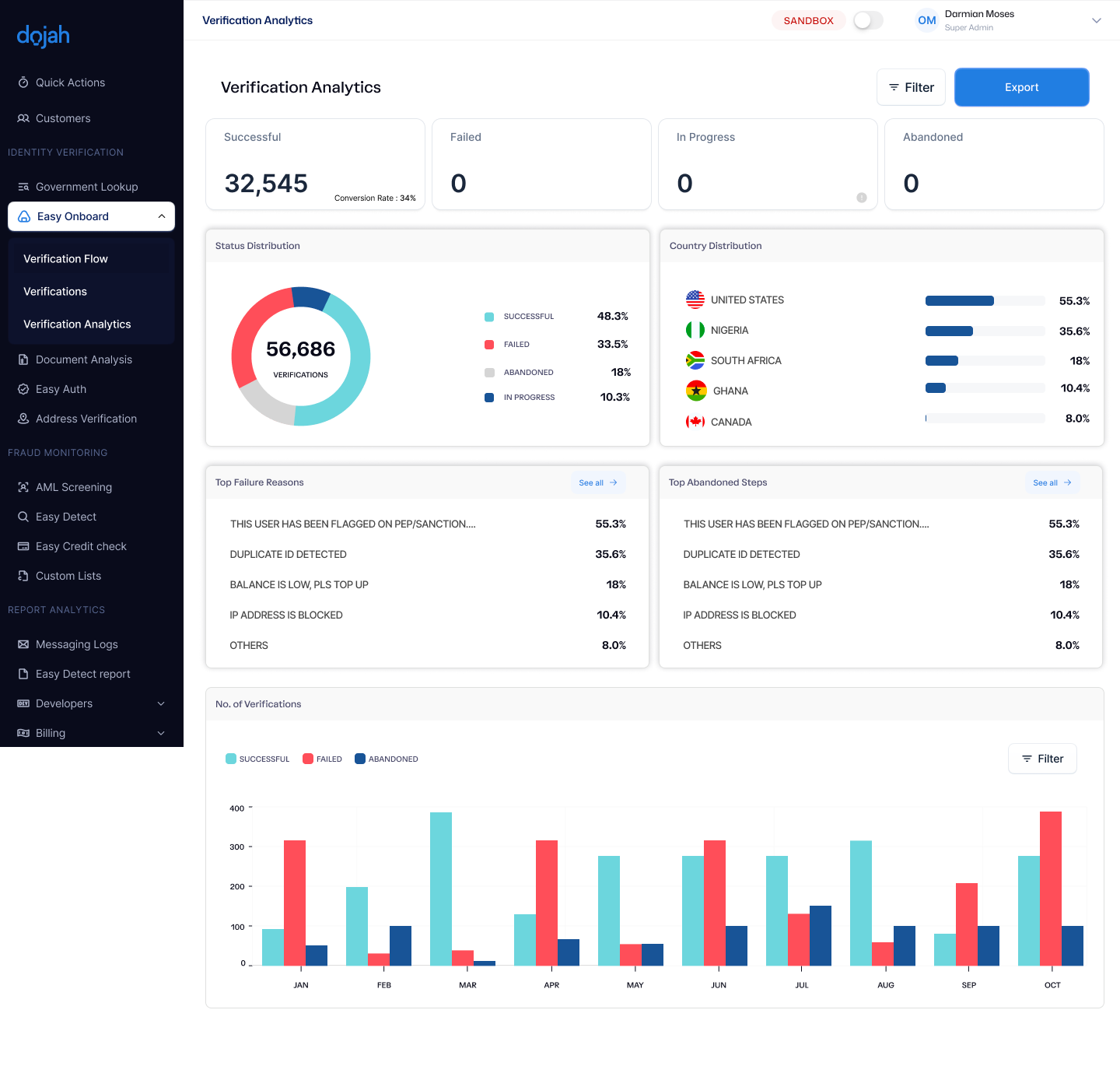
With Dojah, you also get verification analytics that show where users fail or abandon the identity verification process. You can see exactly which step causes the most friction and identify patterns affecting completion rates. These insights can also be exported as PDF or Excel reports, allowing you to track verification performance weekly or monthly and continuously improve your onboarding flow.
Reduce Churn and Improve Customer Onboarding with Dojah
High customer drop-off during onboarding can cost fintechs and banks millions in lost users and revenue. Dojah helps fintechs, banks, and digital platforms simplify identity verification while maintaining compliance and security.
By combining automated real-time ID checks, biometric verification, and detailed verification analytics, Dojah lets your team spot where users drop off and remove friction before it impacts conversion. With over 50 million identities verified, Dojah is built for speed and ease and makes onboarding reliable for your users
See how Dojah can help you improve onboarding completion rates and reduce churn by booking a demo with our team today.
Start using Dojah for all your business needs


