


Go back to Blog


Jennifer Edidiong
Marketing
10 min read
Share to
Dojah V. MetaMap: Best KYC & Fraud Management Solution in Africa
As a founder, fraud, or product lead, you’ve likely faced the challenge of managing user risk and detecting suspicious activity early. It’s crucial to have a platform that not only verifies identities but also provides effective fraud detection and prevention.
MetaMap and Dojah are two platforms in the African fraud management space, each taking a different approach to handling risk and user verification. In this article, we’ll break down what each platform does, compare their key features, and help you understand which solution may be better suited to your needs.
Whether you’re exploring MetaMap alternatives or other suitable options, this guide will help you evaluate both platforms and make an informed decision.
Here’s what we’ll cover:
- Overview and Key features of each platform
- Pros and cons based on real use cases
- Verdict on which platform best supports ongoing fraud monitoring
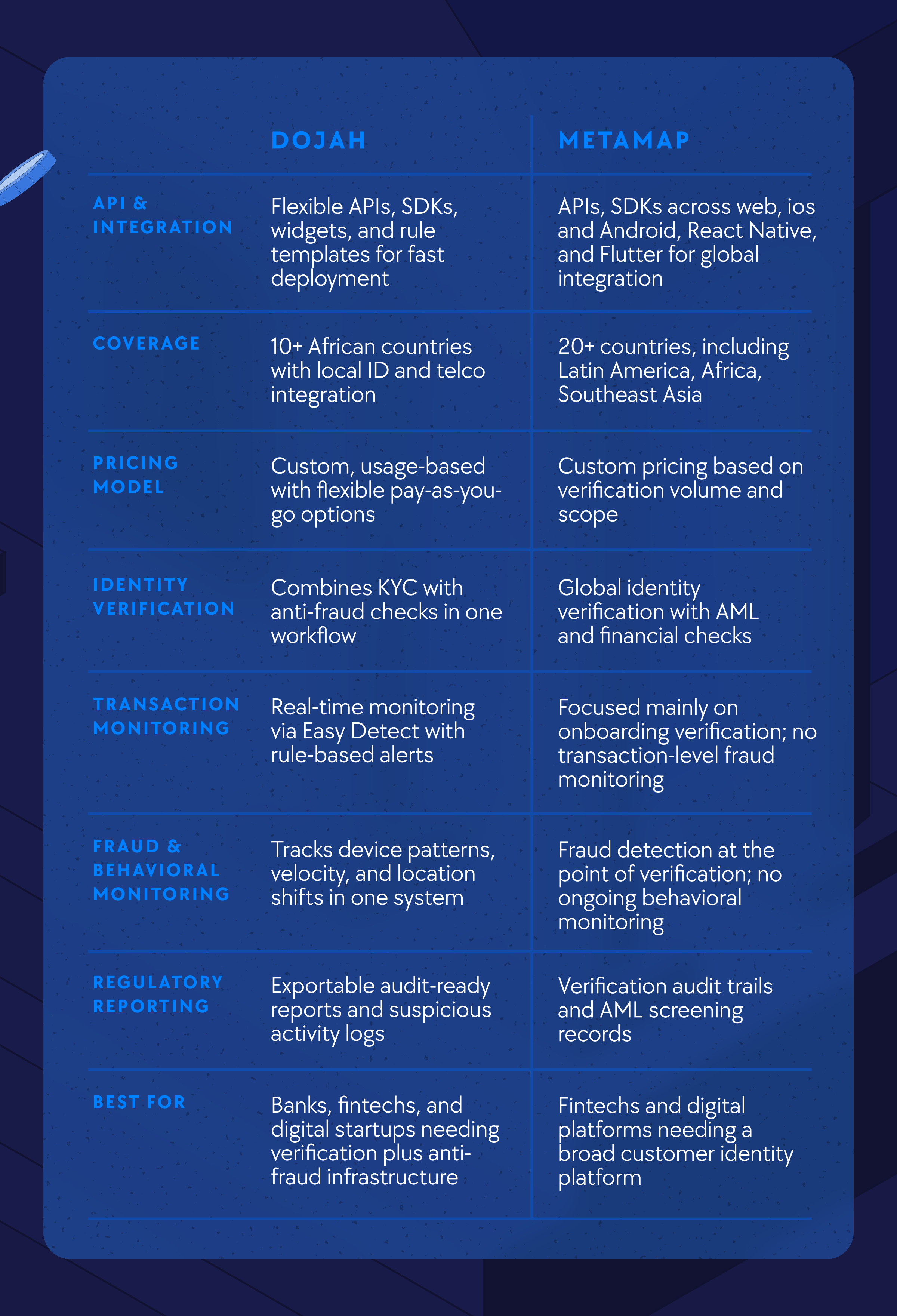
Dojah vs MetaMap: Comparison Table
Dojah Overview
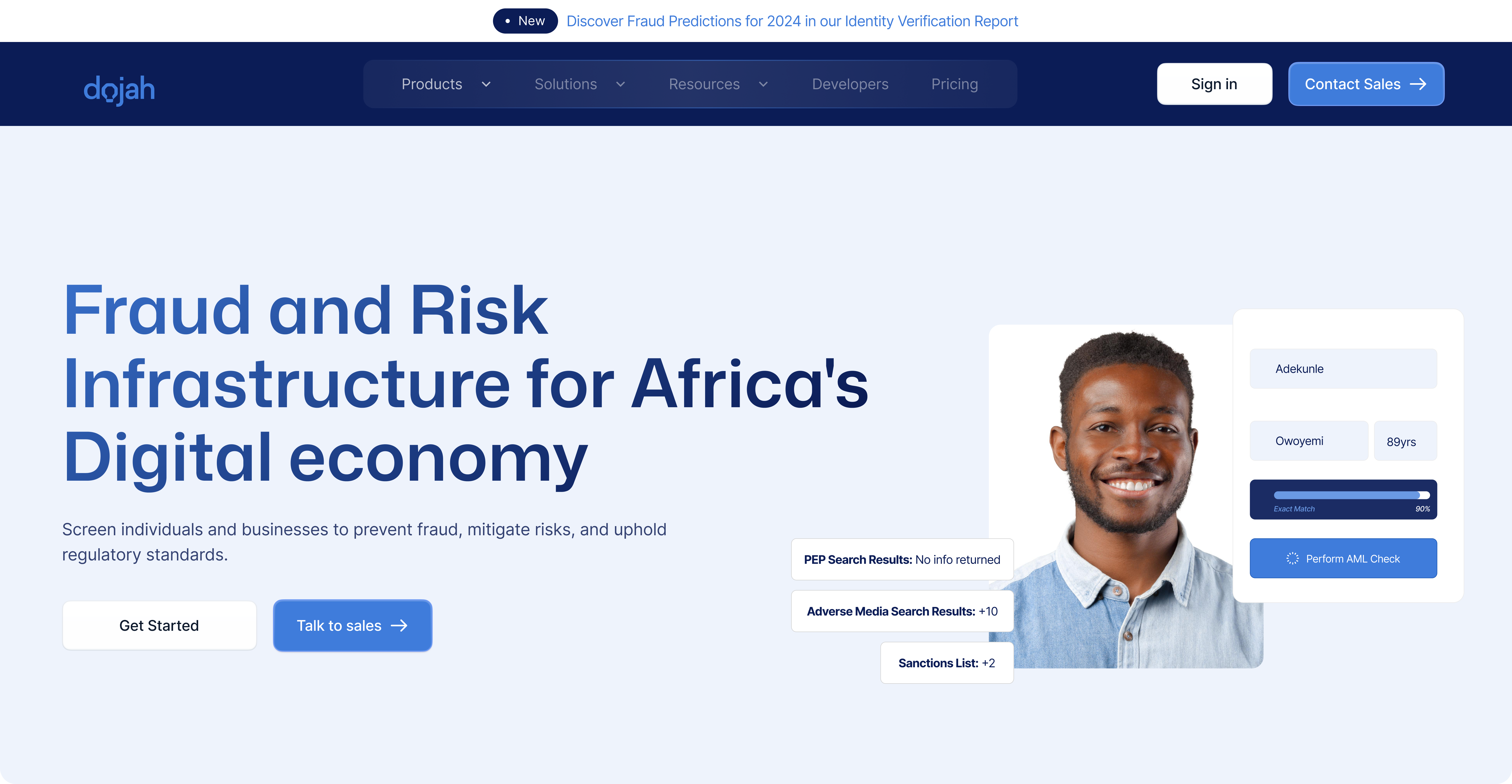
Dojah is an anti-fraud and risk infrastructure platform built for digital businesses across banking, fintech, crypto, and related industries. It combines identity verification and end-to-end fraud monitoring across African countries and international markets. Designed for both startups and enterprises, Dojah enables teams to manage fraud prevention, compliance, and user risk within a single system.
Key Features
- Enhanced Identity Verification: Verify individuals and businesses using government databases, telecom records, biometrics, and watchlist screening across supported African markets.
- Real-Time Data Insights: Track user behavior, drop-off points, and verification performance to gain actionable insights across your onboarding flows.
- Advanced Fraud Detection: Monitor transactions and user behavior in real time across the user lifecycle. Leverage behavioral tracking and dynamic risk scoring to detect suspicious activity early.
- All-in-One Compliance Toolkit: Access KYC, KYB, AML, and fraud checks in a single dashboard, with audit-ready reports and regulatory documentation for easy compliance management.
Pros of using Dojah
1. High Data Accuracy
Dojah connects directly to trusted government databases and extensive local data networks across Africa to verify identities. Whether through document checks, OCR, biometrics, or database validation, every verification is aligned with authoritative sources. This direct integration ensures consistent and reliable results across all supported verification channels.
2. Post-Onboarding Fraud Monitoring
Dojah extends beyond KYC by enabling real-time transaction monitoring through EasyDetect. You can create custom fraud rules, such as flagging transactions above a set threshold, detecting unusual velocity spikes, or identifying abnormal behavioral patterns. This allows your team to act on suspicious activity as it occurs rather than after losses happen.
3. Continuous Risk Assessment
Dojah’s risk monitoring tool, Profiled Risk, helps you maintain visibility into each user across their entire lifecycle. Beyond setting fraud rules, it continuously reviews behavioral and transaction activity to generate a dynamic risk score that evolves. This is particularly useful for platforms handling large transaction volumes, as it provides sustained insight into user risk rather than a one-time assessment.
4. Case Management & Regulatory Reporting
Profiled Risk includes built-in tools for reviewing flagged users, assigning cases, and maintaining decision logs within a centralized dashboard. Fraud and compliance teams can document investigations and manage internal review processes efficiently. Exportable reports, such as Suspicious Transaction Reports (STR) for regulatory review, are also supported.
5. Ease of Integration
Dojah is designed for quick implementation, allowing teams to go live in days rather than weeks. You can integrate verification across web, SMS, WhatsApp, and other user channels without overhauling your existing workflow.
6. Reliable Technical Support
Clear documentation and accessible technical guidance help teams resolve issues efficiently. In a recent case study, users reported that technical problems were resolved within 5 minutes, ensuring minimal downtime and continuity of operations.
Cons of Using Dojah
1. Setup May Require Initial Configuration
While Dojah offers flexibility across identity verification and fraud monitoring solutions, the API setup doesn’t come pre-configured. For non-technical teams seeking a plug-and-play solution, additional technical effort is needed to integrate and customize workflows and thresholds.
2. Government Database Coverage Varies by Country
Dojah provides government database access in 10+ African countries and supports document OCR in over 150 countries. However, access to official databases and verification depth can differ outside these core regions. While document and biometric checks remain available globally, direct government data integration is limited in locations outside Africa.
MetaMap Overview
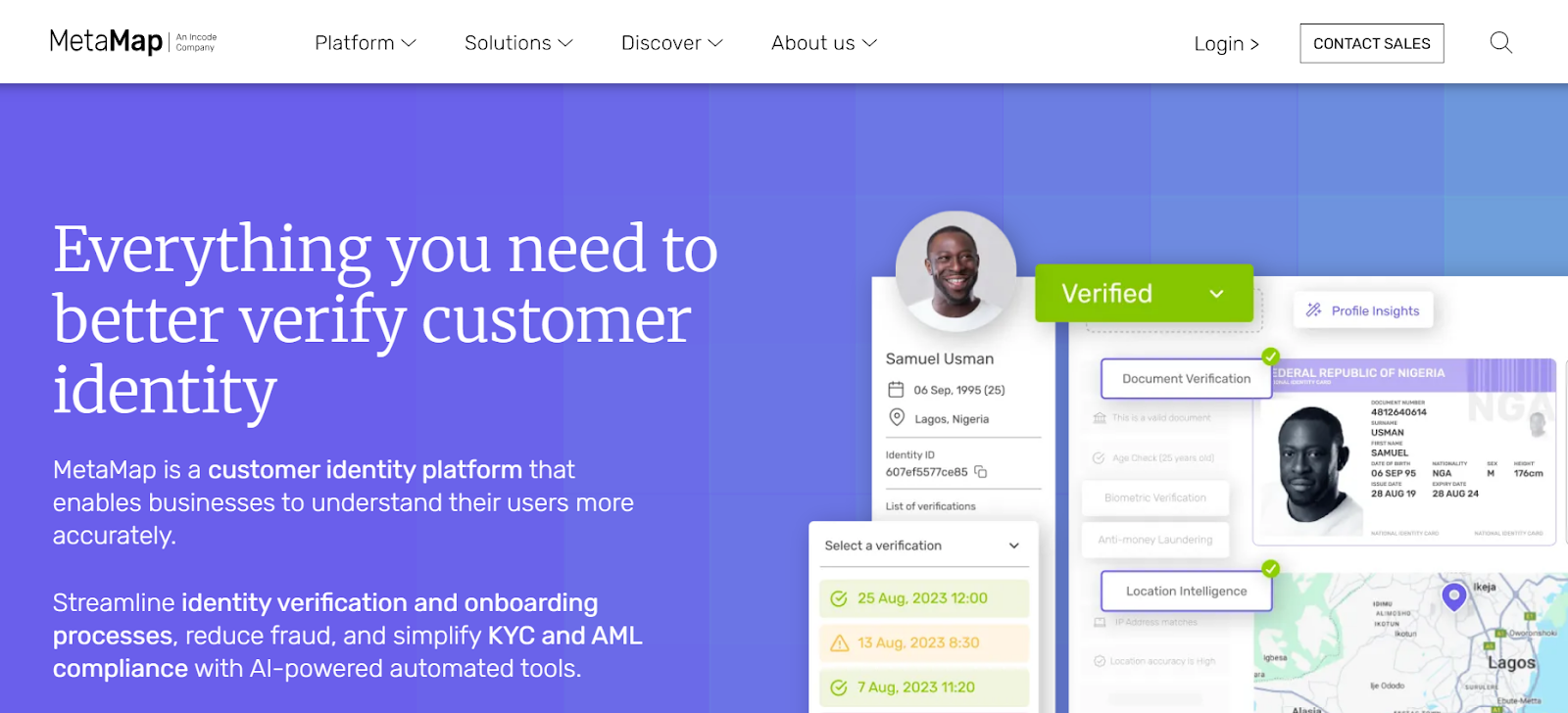
MetaMap is a customer identity platform designed to help businesses understand and verify their users. It provides verification and financial risk insights, allowing teams to customize workflows and access multiple data sources. With a global presence across Latin America, Africa, and Asia, MetaMap serves developers, startups, and enterprise teams looking to build high-trust online services.
Key Features
- Global Identity Verification (KYC & KYB): Verify individuals and businesses using document checks, biometric authentication, AML screening, and access to multiple regional data sources across supported markets.
- Customizable Verification Workflows: Build tailored onboarding flows by combining 80+ data sources and multiple verification tools to match specific compliance requirements.
- Financial Risk & Eligibility Insights: Assess users for financial risk, payment eligibility, and compliance checks to support lending, banking, and other high-trust services.
- Decisioning Dashboard & Monitoring Tools: Review verification results, apply automated rules, and adjust workflows through a centralized dashboard for informed decision-making.
Pros of using MetaMap
Global Database Coverage
MetaMap provides identity verification across 80+ global sources and 20+ countries, with a particularly strong presence in Latin America. This global reach allows businesses to onboard users across regions while maintaining compliance and consistent verification standards.
2. All-in-One Identity Solution
MetaMap combines government checks, watchlist screening, and customer identity verification in a single platform. You can centralize identity and compliance processes while ensuring verification data is consolidated and accessible. It supports both enterprise and smaller-scale platforms.
3. Workflow Customization
With no-code drag-and-drop tools, MetaMap lets you tailor verification workflows to your platform’s needs. It also provides pre-made templates applicable to specific industries and use cases, making it easier to implement or adjust processes as business requirements evolve.
4. Financial Risk Management
MetaMap provides automated workflows to analyze customer financial profiles. You can create processes for checking payment eligibility, loan eligibility, credit history, and tax compliance. This is particularly valuable for banking and lending platforms that need to assess customer risk consistently.
5. Passive Liveness Detection
MetaMap uses passive liveness technology (Incode-powered) to confirm that the user is real during identity verification. This means users don’t need to move their head or perform specific gestures, making verification faster and less disruptive. For platforms handling high volumes, this can help reduce friction.
Cons of Using MetaMap
Limited Post-Onboarding Fraud Visibility
MetaMap provides identity verification and financial risk insights at onboarding, including checks on your users’ previous banking data, credit history, and AML watchlists. However, it does not offer real-time monitoring of transactions and user activity on your platform. If you need ongoing visibility into evolving user risk, this approach may feel limiting.
2. Limited Government Database Access in Africa
MetaMap supports government checks in select African countries like Nigeria, Kenya, and Ghana, but coverage across the continent is narrower than in Latin America. In many markets, verification relies on documents rather than live government data. For companies expanding in francophone Africa, Southern Africa, or smaller markets, this may limit confidence in user verification.
3. Support & Reliability
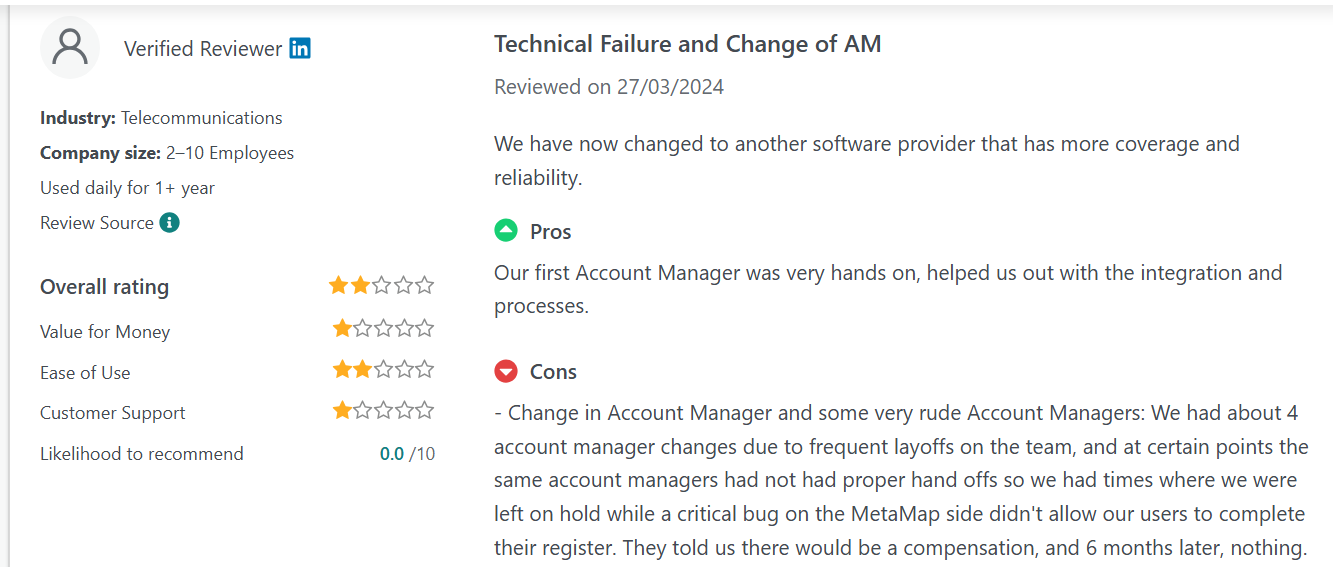
On GetApp, a verified software review site, users have reported occasional downtime and inconsistent support, particularly during account management transitions. For teams that need reliable assistance to resolve issues quickly, this can impact operational continuity and the ability to maintain smooth verification workflows.
Where Dojah Stands Out
While both Dojah and MetaMap offer identity verification and fraud management solutions, there are key areas where Dojah stands out over MetaMap:
1) Monitor fraud beyond onboarding
Unlike MetaMap, which focuses mostly on point-in-time verification, Dojah helps you track transactions and risk signals in real-time across the entire user lifecycle. This continuous monitoring lets you detect suspicious activity early and spot patterns that one-time checks might miss. Businesses can respond faster and prevent losses before they escalate.
2) Resolve fraud investigations faster
Profiled Risk’s built-in case management and audit-ready reports allow fraud and compliance teams to review and resolve cases faster. You no longer need to juggle multiple tools or manually compile reports, saving time and reducing errors. This helps your team respond to suspicious activity quickly while maintaining a clear audit record.
3) Broader African coverage
Dojah integrates with African government IDs, telco data, and local verification systems across multiple countries. It can verify SIM information and detect regional fraud patterns like SIM recycling, which is common across Sub-Saharan Africa. Digital businesses expanding across the continent can rely on these local signals to verify users and scale confidently.
4) Reliable support you can trust
Dojah provides hands-on, responsive support throughout integration and operations. Your team can get guidance on setting up workflows and handling technical issues efficiently. This ensures smooth operations when scaling verification and fraud monitoring across your platform.
Which Fraud Management Tool Is Best for You?
MetaMap works for businesses needing global identity verification at onboarding and is especially useful for teams operating in LATAM or other international markets. However, it doesn’t offer real-time transaction monitoring or updated risk insights after onboarding. If your priority is onboarding scale and verification rather than continuous risk assessment, MetaMap can be a suitable choice.
Dojah, on the other hand, is ideal for growing startups and enterprise platforms that require both identity verification and continuous fraud monitoring. It provides real-time visibility into transactions and detailed risk insights across the user lifecycle. If you’re expanding across Africa and need reliable onboarding along with ongoing activity oversight, Dojah is a better option.
To explore how Dojah can help your platform monitor fraud and manage risk throughout the user lifecycle, reach out to our team or book a demo to get started.
Disclaimer: This article was written based on publicly available information from official websites, documentation, and software review platforms as of February 26, 2025. Any updates, changes, or new features released after this date are not reflected here.
Start using Dojah for all your business needs


