


Go back to Blog


Jennifer Edidiong
Marketing
9 min read
Share to
Dojah vs Prembly: Best Fraud Management Solution in Africa

Choosing a fraud management solution isn't just about finding a provider that can verify users during onboarding. It's about finding one that can help you prevent fraud, manage compliance, and monitor risk as your business grows.
Dojah and Prembly are two of the leading trust and anti-fraud platforms serving African businesses. While both offer identity verification, AML screening, and fraud prevention tools, they take different approaches to helping businesses manage user risk throughout the customer lifecycle.
In this comparison, we'll break down each platform's core features, strengths, and limitations to help you decide which solution is the best fit for your business.
Here's what we'll cover:
- An overview of Dojah and Prembly
- A feature-by-feature comparison
- The pros and cons of each platform
- Which platform is best for your business
Dojah vs Prembly: Comparison Table
Factor | Dojah | Prembly |
| API & Integration | Flexible APIs, SDKs, and no-code widgets for fast deployment | API and dashboard-based integration, with more depth on the API side |
| Coverage | Government database access across 10+ African countries, document coverage in 150+ | Local endpoints across Nigeria, Kenya, Ghana, Uganda, and other African countries |
| Identity Verification & AML (KYC/KYB) | Document, biometric, and database checks with real-time watchlist screening | Document and biometric checks with AML screening plus dedicated vendor/UBO verification |
| Transaction Monitoring & Fraud Detection | Real-time monitoring via EasyDetect with rule-based alerts and case management | Real-time monitoring via IdentityRadar with device fingerprinting and STR automation |
| Continuous Risk Intelligence | Profiled Risk scores users continuously as behavior changes over time | Risk assessment stays close to rules and thresholds |
| Regulatory Reporting | Audit-ready reports built into the dashboard | STR automation and screening analytics via Radar Reports |
| Best For | Banks, fintechs, and digital businesses needing verification plus ongoing risk intelligence | Businesses needing broad multi-country reach plus background checks and vendor screening |
Dojah Overview
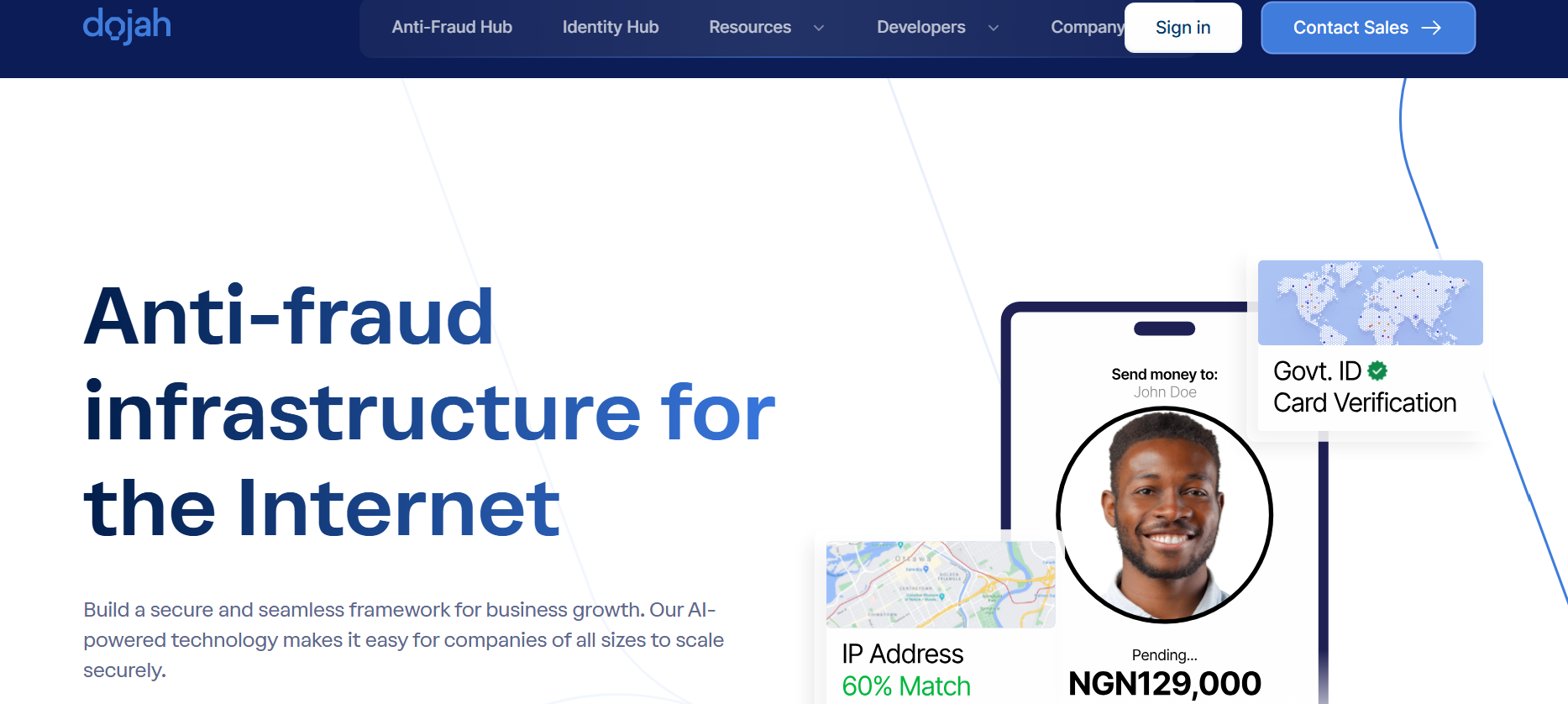
Dojah is an anti-fraud and risk infrastructure platform built for digital businesses across banking, fintech, crypto, and other industries operating in Africa and beyond. It combines identity verification, fraud monitoring, and continuous risk intelligence on a single platform, helping businesses manage user risk from onboarding through the entire customer lifecycle.
Designed for startups, enterprises, and SMEs, Dojah enables teams to verify users, detect fraud, and make more informed trust decisions without relying on multiple disconnected tools.
Key Features
- Enhanced Identity Verification: Verify individuals and businesses using government databases, telecom records, biometrics, and watchlist screening across supported African markets
- Real-Time Data Insights: Track user behavior, drop-off points, and verification performance to gain actionable insights across your onboarding flows
- Advanced Fraud Detection: Monitor transactions and user behavior in real time across the user lifecycle, with behavioral tracking and dynamic risk scoring to catch suspicious activity early
- All-in-One Compliance Toolkit: Access KYC, KYB, AML, and fraud checks in a single dashboard, with audit-ready reports and regulatory documentation for easy compliance management
- No-Code Verification for Everyday SMEs: Dojah’s CheckIn extends identity checks beyond fintech onboarding to property managers, hotels, logistics companies, and events.
Pros of Using Dojah
1. High Data Accuracy
Dojah verifies identities directly against trusted government databases and data networks across Africa, rather than leaning on a single source. Whether the check runs through documents, OCR, biometrics, or database validation, results stay consistent and aligned with official records.
2. Fraud Monitoring That Doesn't Stop at Onboarding
Identity verification is only the first step in preventing fraud. Dojah pairs real-time transaction monitoring by EasyDetect with continuous risk assessment through Profiled Risk, catching suspicious activity as it happens and tracking each user's risk across their full lifecycle.
3. Case Management & Regulatory Reporting
Profiled Risk comes with built-in tools for reviewing flagged users, assigning cases, and keeping decision logs in one dashboard. With this, your fraud and compliance teams can document investigations without juggling separate systems.
4. Ease & Speed of Integration
Dojah is built for quick implementation; teams can go live in days rather than weeks, integrating verification across web, SMS, WhatsApp, and other channels. Clear documentation and hands-on technical guidance back this up, so issues get resolved quickly
5. Simplified Verification for Businesses
With CheckIn, businesses outside the fintech space- property managers, hotels, logistics companies, event organizers- can build shareable, no-code KYC flows in minutes. This makes trusted identity verification accessible across a much wider range of everyday business scenarios.
Cons of Using Dojah
1. Setup May Require Initial Configuration
While Dojah offers flexibility across identity verification and fraud monitoring solutions, the API setup doesn’t come pre-configured. For non-technical teams seeking a plug-and-play solution, additional technical effort is needed to integrate and customize workflows and thresholds.
2. Government Database Coverage Varies by Country
Dojah provides access to government databases in 10+ African countries and supports OCR for documents in over 150 countries. However, access to official databases and verification depth can differ outside these core regions. While document and biometric checks remain available globally, direct government data integration is limited in locations outside Africa
Prembly Overview
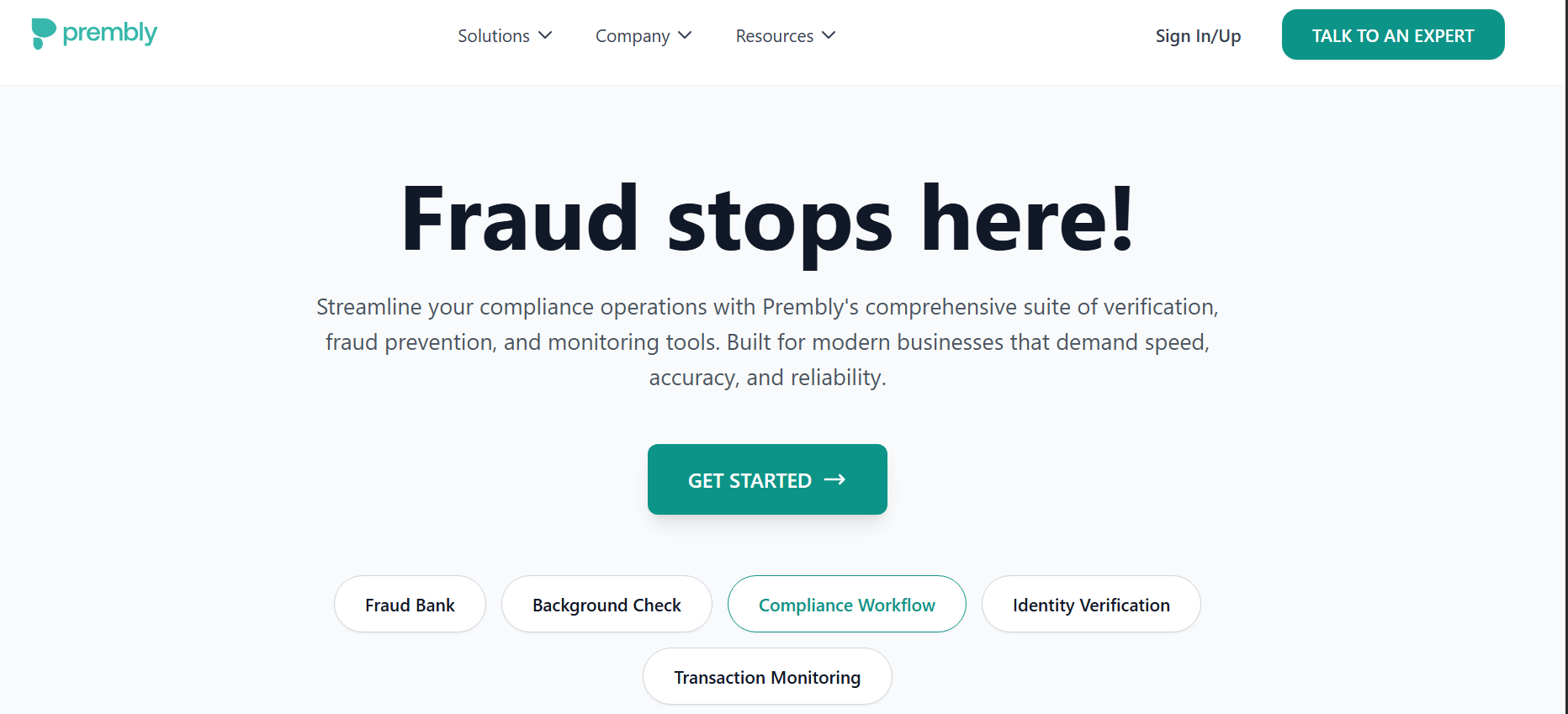
Prembly is an identity verification and compliance platform built for fintechs, digital platforms, and businesses operating across Africa. Originally launched as IdentityPass, the platform has expanded beyond identity verification to include fraud detection, AML compliance, vendor verification, and background screening, helping businesses build trust while meeting regulatory requirements.
Today, Prembly enables businesses to verify users and businesses, screen vendors, monitor transactions for suspicious activity, and carry out background checks through a single platform.
Key Features
- IdentityPass: KYC/KYB verification covering government ID checks, document verification across a wide range of document types, biometric authentication, and address verification
- IdentityRadar: Fraud detection and AML compliance, including transaction monitoring, device fingerprinting, IP/VPN checks, and automated Suspicious Transaction Report workflows
- Vendor and Business Verification (KYB): Screens vendors and suppliers, validates business registrations, identifies Ultimate Beneficial Owners, and runs recurring merchant risk monitoring
- Background Checks (BGC): Criminal history and employment verification, packaged for HR and gig economy use cases
- FraudLens: An open-source fraud intelligence database aggregating fraud incidents reported across Prembly's partner network
Pros of Using Prembly
1. Broad Multi-Country Reach
Beyond Nigeria, Prembly runs live endpoints in Kenya, Ghana, Uganda, and other African countries. A business expanding across Africa can onboard users in multiple countries through one integration, instead of using different verification providers for every market.
2. Built-In Background Screening
Prembly includes dedicated background check services that support criminal history and employment verification. This makes it suitable for businesses that need to verify not only identities but also an individual's professional or employment history before onboarding.
3. Comprehensive Vendor Verification
Beyond standard business verification, Prembly allows businesses to validate company registrations, identify Ultimate Beneficial Owners (UBOs), and monitor merchant risk over time. Businesses get ongoing visibility into who the merchants or vendors they partner with actually are
4. A Shared Fraud Intelligence Network
FraudLens pools fraud data reported across Prembly's entire partner network into one open database. Instead of only working with the fraud signals your own platform generates, you get visibility into patterns other institutions are already seeing, which helps catch bad actors early.
5. Extensive Document Coverage
Prembly verifies against thousands of document types across hundreds of regions worldwide. This gives businesses onboarding a wider mix of users, cross-border customers, and diaspora users with foreign-issued IDs more flexibility.
Cons of Using Prembly
1. Risk Monitoring Is Primarily Rule-Based
IdentityRadar provides transaction monitoring, configurable fraud rules, and AML screening to help businesses detect suspicious activity. However, risk assessments are largely driven by predefined rules and events rather than continuously evolving user behavior over time.
2. Not Built for Everyday Businesses
Prembly's tools are designed around formal KYC, KYB, and background-check workflows, which fits its core fintech and enterprise base well. This might be limiting for everyday businesses, like hotels, property managers, and event organizers, who need a quick identity check without a technical integration.
Where Dojah Stands Out
1. Risk monitoring that doesn't stop at a single check
Unlike Prembly, which centers on rules-based screening at the point of transaction, Dojah tracks user behavior risk continuously through Profiled Risk, combining rules with AI-powered data for a fuller picture. That ongoing visibility helps you catch patterns a one-time or rule-triggered check would miss, and respond before risk turns into loss.
2. Unified dashboard for fraud investigations
Profiled Risk's built-in case management and audit-ready reports mean your fraud and compliance teams can review, assign, and close cases without juggling separate tools or compiling reports by hand.
3. Trust decisions for everyday business
With CheckIn, Dojah brings identity verification to everyday businesses and goes beyond fintech-related use cases. If you're a property manager or a hotel operator, you can confirm a tenant or guest's identity in minutes without hiring developers or building out a compliance team.
4. Technical Support & Uptime You Can Rely On
Dojah users report up to 99.9% uptime, backed by hands-on technical support that helps teams troubleshoot integration issues and resolve failed checks quickly. For platforms running verification and fraud checks around the clock, this means fewer disruptions.
5. Full visibility into every identity check
Each check comes back with a clear trust score between 0 and 100, not just a pass or fail. You can see exactly why a customer dropped off mid-verification or why a specific check failed with full verification history and logs in your dashboard, making it easier to fix drop-off points.
Which Platform Is Best for You?
Prembly works well for platforms that need the multi-country coverage plus formal background checks and vendor screening. If your priority is broad documented reach across several African countries and a dedicated background-check layer, Prembly offers a well-rounded compliance toolkit.
Dojah is the better fit for businesses that need identity verification to extend beyond onboarding into continuous fraud monitoring and risk management. Alongside KYC, KYB, and AML compliance, you get risk scoring and no-code identity verification, making it suitable for enterprises, fintechs, and even everyday businesses looking to build trust at every stage of the customer journey.
Start using Dojah for all your business needs


