


Go back to Blog


Jennifer Edidiong
Marketing
6 min read
Share to
How African SMEs Can Automate Employee Verification Before Onboarding New Hires

Hiring has become easier than ever. Businesses can recruit candidates from different cities, countries, and professional networks without ever meeting them in person.
But this convenience comes with a challenge.
How do you know that the person you're about to onboard is actually who they claim to be?
For many growing businesses, onboarding still relies on submitted documents, phone calls, and trust. Yet identity fraud, document manipulation, and impersonation are becoming increasingly common. A single bad onboarding decision can expose your business to financial loss, data breaches, operational disruption, and reputational damage.
Before granting access to company systems, customer information, payroll, financial tools, or physical locations, businesses need a reliable way to verify the identity of new hires.
This is where identity verification becomes an important part of modern employee onboarding.
Why Identity Verification Matters During Employee Onboarding
As businesses scale, manual verification becomes difficult to manage.
Teams are hiring more people, working remotely, and onboarding contractors, temporary staff, and third-party workers faster than ever before.
Without a structured verification process, businesses risk onboarding individuals using:
- Fake or altered identity documents
- Stolen identities
- Incorrect personal information
- Unverifiable contact details
- Misrepresented identities
The consequences can be costly.
An unverified employee may gain access to sensitive systems, customer data, internal communications, or financial resources before issues are discovered.
Identity verification helps businesses establish trust before access is granted.
What Should Businesses Verify Before Onboarding?
Employee onboarding verification starts with confirming that the individual is genuinely who they claim to be.
This typically includes:
Identity Verification
Verifying government-issued identity documents such as:
- National ID cards
- Passports
- Driver's licences
- Other accepted identification documents
This helps confirm that submitted information belongs to a real individual.
2. Face Verification
Face verification compares a live selfie with the photo on an identity document to confirm that the person completing onboarding matches the document owner.
This adds another layer of protection against impersonation.
3. Liveness Detection
Liveness checks help ensure that the verification is being completed by a real person and not through screenshots, printed photographs, or manipulated media.
4. Contact Information Verification
Businesses may also verify phone numbers and email addresses to ensure they can communicate with employees throughout the onboarding process.
Together, these checks help businesses build confidence before granting access to company resources.
Why Manual Verification Doesn't Scale
Many SMEs still rely on manual review processes. An administrator receives documents by email or WhatsApp, compares information manually, and attempts to determine whether everything appears legitimate.
While this may work for a few hires, it quickly becomes inefficient as hiring volumes increase.
Manual verification often results in:
- Longer onboarding timelines
- Inconsistent review standards
- Increased administrative workload
- Greater risk of human error
- Poor record-keeping
Businesses need a faster and more reliable approach.
What Modern Employee Verification Looks Like
Modern employee identity verification is designed to help businesses establish trust before onboarding, without creating unnecessary delays for HR and operations teams.
In the past, verification often involved collecting documents through email or messaging apps, manually reviewing information, and trying to determine whether everything looked legitimate. While this approach may work when hiring a handful of people, it becomes increasingly difficult as businesses grow.
Today, businesses are adopting more structured verification processes that help them confirm identities before granting access to company resources.
A typical employee verification process includes:
Collecting Identity Information
The employee submits basic information along with a government-issued identity document, such as a national ID card, passport, or driver's licence.
2. Verifying Identity Documents
The submitted document is checked to ensure it is valid and that the information provided is consistent.
3. Confirming the Individual's Identity
Face verification helps confirm that the person completing the onboarding process is the same person shown on the identity document.
4. Performing Liveness Checks
Liveness detection helps ensure that a real person is completing the verification process, reducing the risk of impersonation attempts using photographs, screenshots, or manipulated media.
5. Reviewing Verification Results
Once verification is complete, businesses can review the outcome and make onboarding decisions with greater confidence.
By following a structured verification process, businesses can reduce manual effort, improve consistency, and establish trust before granting access to systems, payroll, customer information, or workplace resources.
This approach allows growing businesses to onboard employees faster while maintaining stronger security and accountability across their workforce.
Introducing Checkin: The Modern Way to Verify Employee Identity
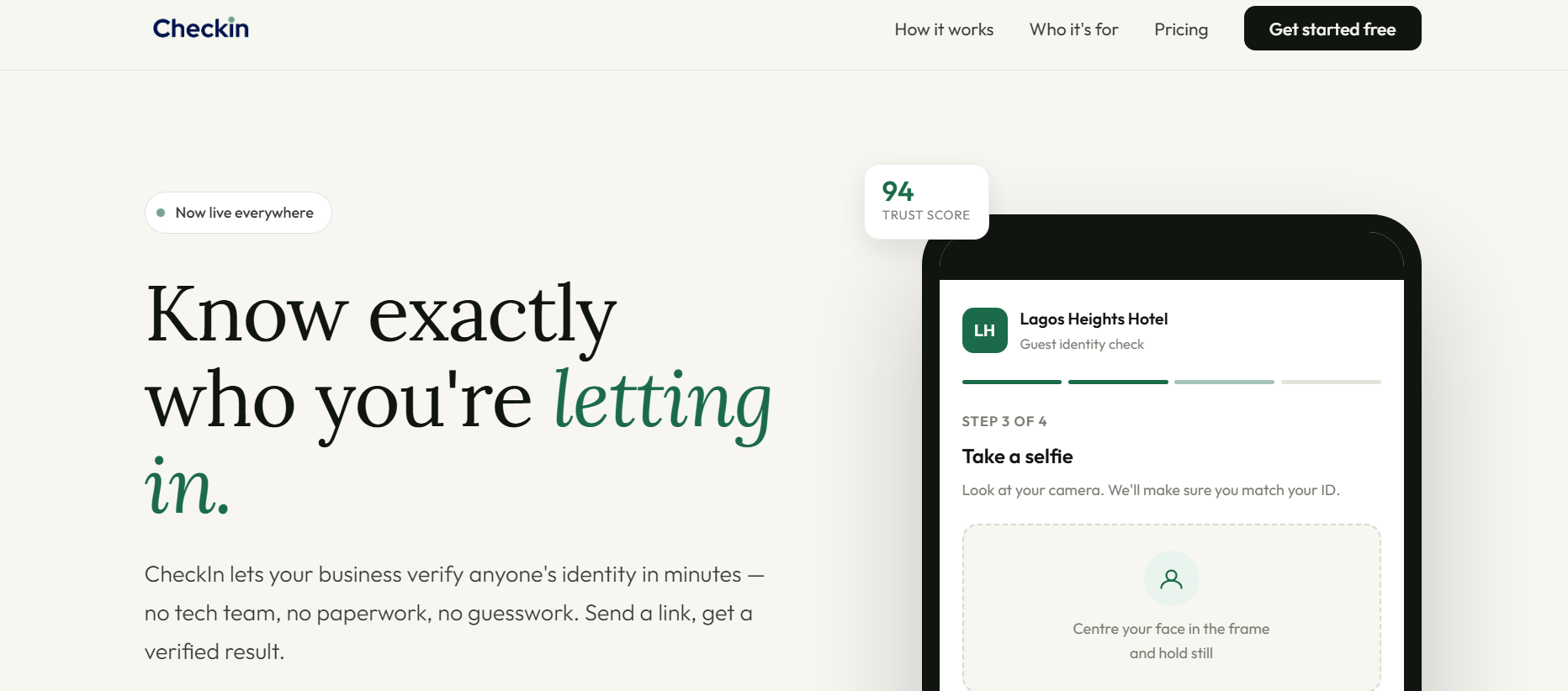
Modern employee verification doesn't need to involve endless document reviews, back-and-forth emails, or manual checks. Checkin helps businesses verify the identity of employees, contractors, and new hires before onboarding, without requiring technical integrations or complex setup.
Instead of manually reviewing documents, businesses can create a verification workflow and send a verification link directly to the individual.
The employee completes the verification process from their phone or device.
Depending on the workflow, the process can include:
- Identity document verification
- Face verification
- Liveness detection
- Phone number verification
- Email verification
Once completed, businesses receive a verification result that helps them make informed onboarding decisions. The entire process can be completed in minutes.
A Better Way to Onboard Employees
Identity verification should not be an afterthought.
As businesses grow, establishing trust before onboarding becomes increasingly important. Verifying employee identities helps reduce risk, improve accountability, and create a stronger onboarding process from day one.
Whether you're onboarding full-time employees, contractors, field agents, temporary staff, or remote workers, identity verification provides an additional layer of confidence before access is granted.
With Checkin, businesses can verify people quickly, securely, and without building custom verification infrastructure.
Explore Checkin today and see how easy employee identity verification can be.
Frequently Asked Questions
What is employee identity verification?
Employee identity verification is the process of confirming that a new hire is who they claim to be before onboarding. This can involve verifying identity documents, conducting face verification, and performing liveness checks.
2. Why is identity verification important during onboarding?
Identity verification helps businesses reduce the risk of impersonation, identity fraud, and unauthorized access to company systems, customer data, and workplace resources.
3. Can identity verification be completed remotely?
Yes. Modern verification tools allow employees to complete identity verification from their phone or computer by submitting identification documents and completing verification checks online.
4. How long does employee identity verification take?
The verification process can often be completed within minutes, depending on the checks being performed and the information submitted.
5. How does Checkin help businesses verify new hires?
Checkin enables businesses to create verification workflows, send verification links to employees or contractors, and receive verification results without requiring technical integrations or manual document reviews.
Start using Dojah for all your business needs


