


Go back to Blog


Jennifer Edidiong
Marketing
10 min read
Share to
VASP KYC Compliance in Kenya for Crypto Platforms in 2025
In October 2025, Kenya became one of the first African countries to govern virtual asset providers (VASPs). If you’re running a crypto exchange, wallet, or any platform facilitating digital assets in Kenya, this law directly affects you. Kenya’s new VASP framework sets clear legal obligations that determine whether your crypto platform can operate, scale, and retain user trust in the country.
The 2025 VASP Bill is designed to protect both platforms and users, ensuring transactions are secure and transparent. It provides a framework for operating legally and establishing credibility in a fast-growing market. Non-compliance can bring serious penalties, while meeting these requirements opens the door to operating confidently and building trust with your users.
In this guide, you’ll learn exactly what VASP KYC compliance in Kenya entails. You’ll discover:
- The specific KYC and AML requirements every VASP must meet
- Common compliance challenges crypto platforms face in Kenya
- How to automate verification and onboarding efficiently
By the end, you’ll not only understand what Kenya expects from VASPs but also how to implement a reliable and compliant KYC process tailored to the Kenyan market.
Understanding Kenya's VASP Bill for Crypto Platforms
Kenya has officially stepped into the spotlight as one of Africa’s first countries to regulate virtual asset service providers (VASPs) fully. The VASP Bill was passed by Parliament on October 7 2025, and signed into law on October 15, 2025. This means any crypto platform operating in Kenya now has clear rules to follow or face penalties. The law introduces licensing, reporting, and operational standards that every VASP must meet before serving users in Kenya.
The bill sets out the legal framework for all VASPs, outlining how they operate, report, and safeguard customer assets. It is designed to protect users, prevent fraud, and ensure that crypto platforms operate transparently and securely.
So, what exactly counts as a VASP? Exchanges, wallets, peer-to-peer platforms, payment processors, and token issuers are all subject to the law.
Oversight is handled by both the Capital Markets Authority (CMA) and the Central Bank of Kenya (CBK), ensuring investor protection and financial stability. If your platform facilitates crypto transactions in Kenya, you are officially a VASP and must comply.
See: 6 ways to detect fraud in crypto for African exchanges
Updated VASP KYC Requirements in Kenya
According to Kenya’s updated law, all VASPs must meet specific KYC standards to stay compliant. It is important to understand these requirements so you know what is expected of your platform and can onboard customers securely.
Here is a detailed breakdown:
Customer Identification (Individuals)
For individual customers, the law requires collecting basic personal information to verify their identity accurately. The required information includes:
- Full name
- Date of birth
- Nationality
- Residential address
- Government-issued ID (passport, national ID, or driver’s license)
- Proof of address
Verification must be done against official databases, such as the Integrated Population Registration System (IPRS), to ensure accuracy and compliance. This real-time database validation is essential for meeting CMA and CBK audit expectations.
Business Customer Verification
For corporate clients, KYC goes a step further. Platforms must collect:
- Company registration documents
- Registration numbers
- Details of ultimate beneficial owners (UBOs)
- Directors’ government-issued IDs
- Proof of business address
This ensures that all entities using the platform are legitimate and can be traced. Kenya places particular emphasis on UBO transparency to reduce risks associated with shell companies and cross-border fraud.
Enhanced Due Diligence (EDD)
Certain customers or transactions require additional scrutiny. EDD applies when:
- Transactions exceed KES 1,000,000
- Customers are from high-risk jurisdictions
- Customers are politically exposed persons (PEPs)
Extra checks include:
- Source of funds verification
- Purpose of the transaction
- Ongoing monitoring of activity
Under the 2025 Bill, EDD cases must be documented thoroughly for regulators and may require periodic review.
AML & Sanctions Screening
All VASPs must screen customers against global watchlists and perform continuous monitoring. Required checks include:
- OFAC, UN, and EU sanctions lists
- PEPs and adverse media
- Ongoing monitoring for suspicious activity
Compliance tip: Manual KYC verification can take 3–5 days, while automated KYC solutions can verify customers in under 60 seconds, helping platforms reduce onboarding delays and errors.
Dojah’s EasyOnboard offers a seamless KYC process for VASPs in Kenya. Find out more here
Common VASP Compliance Challenges in Kenya
Despite the clarity the VASP Bill provides, crypto platforms in Kenya still face several compliance hurdles that can slow growth and increase risk. These include:
Manual Verification Bottlenecks
Manually checking each customer’s identity can be slow and frustrating, especially as your user base grows. You may see users abandon sign-ups because the process is slow or complicated. At the same time, your compliance team spends many hours on routine checks, which increases operational costs and slows onboarding.
2. Government Database Access
Connecting to official databases such as Kenya’s IPRS can be technically complex and time-consuming. You may struggle with whether to verify in real-time or in batches, and face integration challenges with your platform. Slow or unreliable access can delay verification and frustrate users.
3. Ongoing Monitoring Complexity
Compliance does not end after onboarding; continuous monitoring is essential to detect suspicious activity. You need to track high-risk behaviour, review transactions for unusual patterns, and regularly check sanctions lists. Managing all of this manually can also overwhelm your team.
4. Regulatory Fragmentation and Overlaps
Kenya has multiple regulatory bodies, including CBK and CMA, which sometimes issue overlapping or unclear guidance. It can be confusing to know exactly which requirements apply to your platform or how to implement them consistently. This can create inefficiencies and increase the risk of missing critical compliance obligations.
5. High Compliance Costs for Startups
Smaller or newer crypto platforms often feel the financial burden of implementing full KYC and AML systems. You need to pay for database access, monitoring tools, and hire staff to manage compliance effectively. These expenses can make scaling your platform in Kenya more challenging.
How Dojah’s EasyOnboard Simplifies Kenyan VASP Compliance
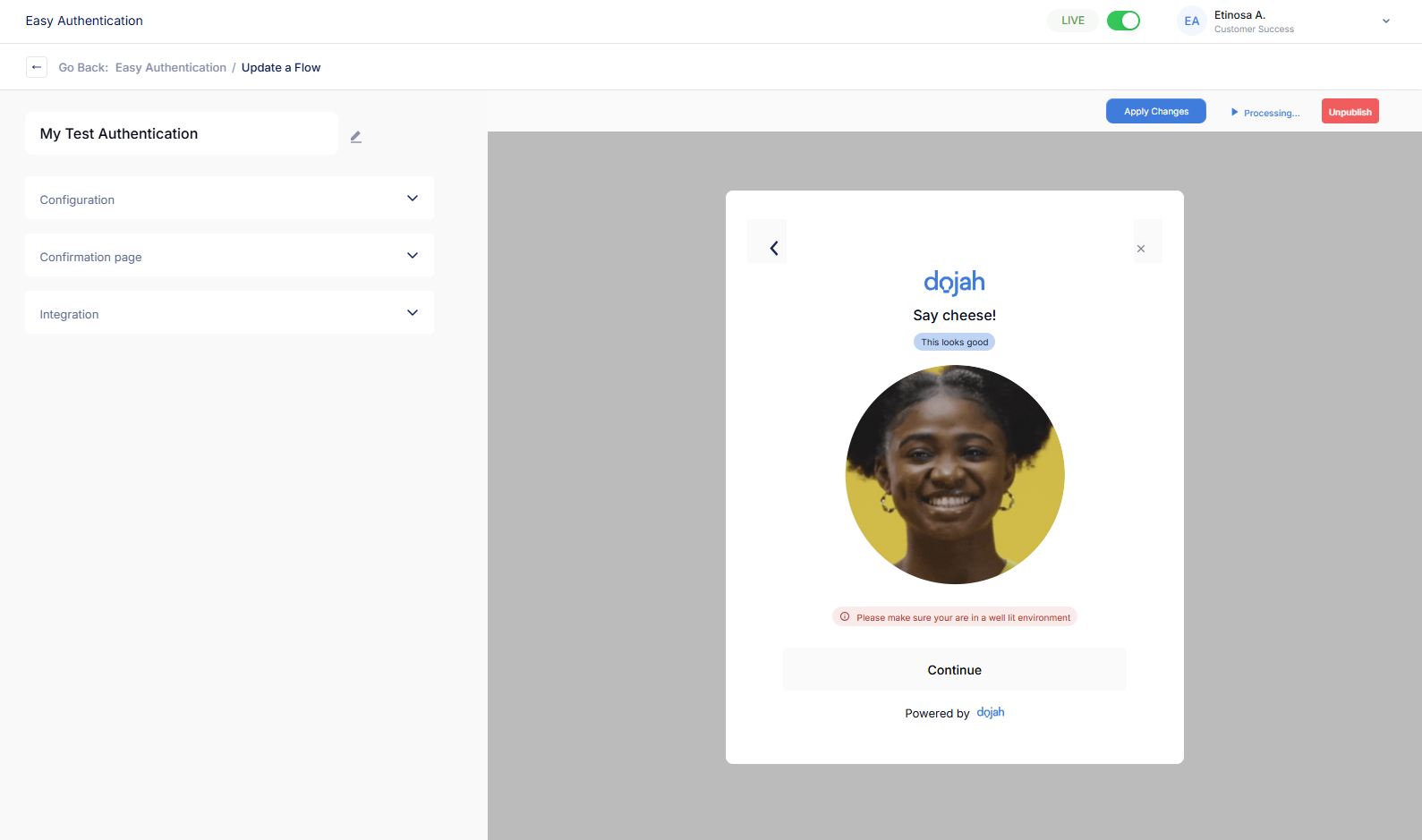
To overcome compliance challenges in Kenya, your VASP needs a KYC solution designed for the local market. Dojah's EasyOnboard is purpose-built for African fintech and crypto ecosystems, ensuring you meet both regulatory demands and user expectations.
Here are the key features that make KYC easier for your platform:
- Faster Customer Onboarding
EasyOnboard enables users to upload their ID, complete OCR verification, and perform a liveness check in minutes. Verification occurs in minutes with minimal downtime, eliminating slow processes that cause drop-offs. This speed is especially important for crypto platforms where users expect near-instant onboarding.
2. Accurate Individual Verification
All individual KYC checks connect directly to official databases like IPRS, giving you 99.9% accuracy in verification. This ensures you capture reliable information and prevents fraudulent accounts from entering your platform. By relying on authoritative databases, EasyOnboard reduces false positives, false negatives, and duplicated identities.
3. Simplified Business Customer Checks
EasyOnboard automatically verifies company documents, directors’ IDs, and UBOs. This removes the complexity of manually gathering and checking multiple documents for corporate accounts. This is particularly valuable for P2P platforms and OTC desks that handle large corporate flows.
4. Automated AML & Sanctions Screening
EasyOnboard integrates with Dojah’s AML solution to screen OFAC, UN, EU sanctions, PEPs, and adverse media in seconds. This lets you detect high-risk users instantly without manually reviewing lists. Continuous automated screening keeps your VASP compliant while reducing operational errors.
5. Continuous Verification Made Easy
EasyOnboard supports ongoing verification, monitoring transactions and user status automatically. Alerts notify you only when there are exceptions or high-risk activity, so your team can focus on critical cases. This ensures compliance is maintained effortlessly without overwhelming your operations.
6. Startup-Friendly Pricing & Reliable Support
EasyOnboard offers competitive pricing for startups, so cost is not a barrier to compliance. With reliable customer support and a platform trusted by leading crypto companies in Africa like Zend Wallet, you gain confidence in your KYC process. Your VASP can scale smoothly while staying fully compliant in Kenya.
See how ZendWallet cut fraud risk in crypto and built user trust across Africa with EasyOnboard
VASP KYC Compliance in Kenya Made Easy with Dojah
Kenya’s new VASP law makes it clear that crypto platforms must meet strict KYC and compliance standards to operate legally. Compliance goes beyond avoiding penalties; it protects your platform from fraud and supports long-term growth. Every VASP needs to understand these regulations and apply them effectively to build trust and scale confidently.
With Dojah's EasyOnboard, you can automate verification, AML screening, and monitoring to make the KYC process faster and more accurate. This reduces manual work and gives your users a smoother onboarding experience
Trusted by 500+ businesses and with over 50 million identities verified, Dojah provides a compliant and reliable foundation for scaling your crypto platform in Kenya.
Book a demo today to simplify KYC for your VASP in Kenya with EasyOnboard.
FAQs on VASP KYC Compliance in Kenya for Crypto Platforms in 2025
1. What are Kenya’s VASP KYC requirements?
VASPs must verify individual and business customers, conduct enhanced due diligence for high-risk cases, and perform ongoing AML and sanctions screening. Required info includes personal data, government IDs, company documents, UBO details, and proof of address.
2. What happens if a crypto platform doesn’t comply?
Non-compliance can result in fines, legal penalties, and reputational damage, and increases the risk of fraud on your platform.
3. How can I verify customers efficiently under Kenya’s VASP regulations?
Automated KYC solutions let you verify identities, check sanctions lists, and validate businesses in minutes, reducing manual workload, onboarding delays, and compliance errors.
4. Which regulatory bodies oversee VASPs in Kenya?
The Capital Markets Authority (CMA) and Central Bank of Kenya (CBK) jointly oversee VASPs to ensure compliance, protect users, and maintain financial stability.
5. What are common compliance challenges for VASPs in Kenya?
Challenges include slow manual verification, complex database access, ongoing monitoring demands, overlapping regulations, and high compliance costs for startups.
6. Can startups afford to comply with Kenya’s VASP regulations?
Yes. Cost-effective automated KYC solutions like Dojah’s EasyOnboard reduce manual work and operational costs while keeping your platform fully compliant.
Start using Dojah for all your business needs


