


Go back to Blog


Jennifer Edidiong
Marketing
9 min read
Share to
Top 5 Anti-Fraud Solutions for African Crypto Platforms in 2026

Crypto and fraud have become almost synonymous over the past few years. As adoption accelerates, crypto platforms are increasingly treated as high-risk by regulators, financial institutions, and fraud networks alike. In Africa, where crypto usage continues to grow rapidly across exchanges and P2P platforms, the risk is equally significant.
For crypto founders and fraud managers, the challenge in 2026 goes far beyond onboarding or basic KYC checks. The real question is no longer just who is joining your platform, but what they do after. Today’s most damaging fraud in crypto often unfolds post-onboarding through wallet activity and behavioral patterns that basic verification methods are not designed to detect.
This article breaks down five anti-fraud solutions African crypto platforms need to operate safely and scale confidently in 2026. Rather than relying on a single line of defense, it explains how a multi-layered fraud prevention strategy helps you detect risk early, as crypto fraud in Africa continues to evolve.
Multi-step Identity Verification (KYC Built for Crypto Scale)
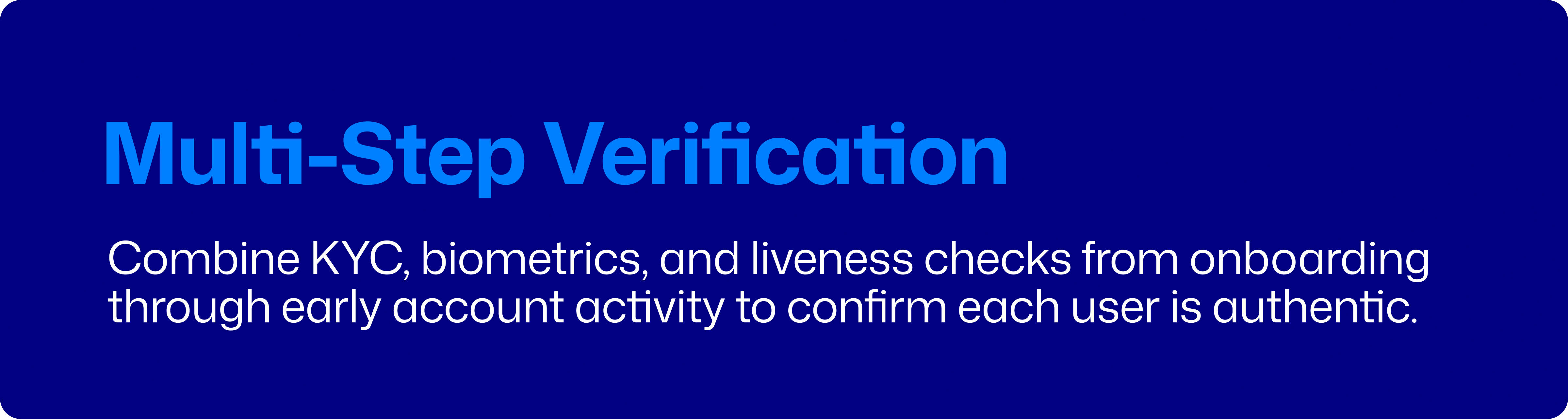
When you’re running a crypto platform in Africa, one fraud pattern you’ve likely already seen is identity fraud. A user may sign up with seemingly valid documents, but over time, their account could be misused. Identity-related fraud accounts for 31% of crypto fraud cases globally, and African exchanges and wallets will need to be ready for this in 2026 as adoption grows across borders and many users remain pseudonymous.
With new users joining daily, strengthening your anti-fraud defenses means using a multi-step identity verification solution built for scale. This combines local document coverage with biometric checks and liveness detection to confirm that each account belongs to a real person. Your identity verification tool should cover the full user journey, from onboarding through early account activity, rather than being a one-time check.
Pro tip: Integrate document and biometric checks into a single workflow to handle high-volume onboarding efficiently and ensure every wallet and P2P transaction starts with a verified identity.
2. AML Watchlist Screening (Designed for High-level Risk)
Another risk crypto platforms face is exposure to sanctioned, high-risk, and politically exposed individuals (PEPs) who use crypto to bypass financial restrictions and launder funds. Because crypto transactions are fast and hard to trace, weak AML controls allow these activities to go unnoticed.
Some of the most common techniques include:
- Mixers and tumblers: Pooling funds from multiple users to obscure the original source of transactions.
- Privacy coins: Using anonymity-focused assets like Monero or Zcash to hide transaction details and wallet identities.
- Peel chains and smurfing: Breaking large illicit amounts into smaller, frequent transactions to avoid triggering exchange thresholds.
Your crypto exchange needs continuous AML watchlist screening that flags users as soon as they appear on global sanctions, PEP lists, or adverse media. Screening should operate across onboarding, ongoing transactions, and whenever risk profiles change, so high-risk individuals are flagged the moment they sign up on your platform.
Key takeaway: Use an AML watchlist that combines global coverage with African-specific regulations and local risk signals, and keep your platform under continuous rescreening.
Download the Dojah Fraud Insights Report to explore emerging fraud trends across Africa
3. Transaction Monitoring (Track Activity, Not Just Identities)
In the past year, the total incoming illicit cryptocurrency activity worldwide reached approximately USD 158 billion, with popular currencies like Bitcoin and Ethereum being the most exploited. Much of this was driven by fraud rings and organized underground networks, which even led to the shutdown of some exchanges. Africa could face increasing risks in 2026, especially in Sub-Saharan regions, where frequent peer-to-peer transactions and complex wallet networks make it easier for fraudsters to move illicit funds unnoticed.
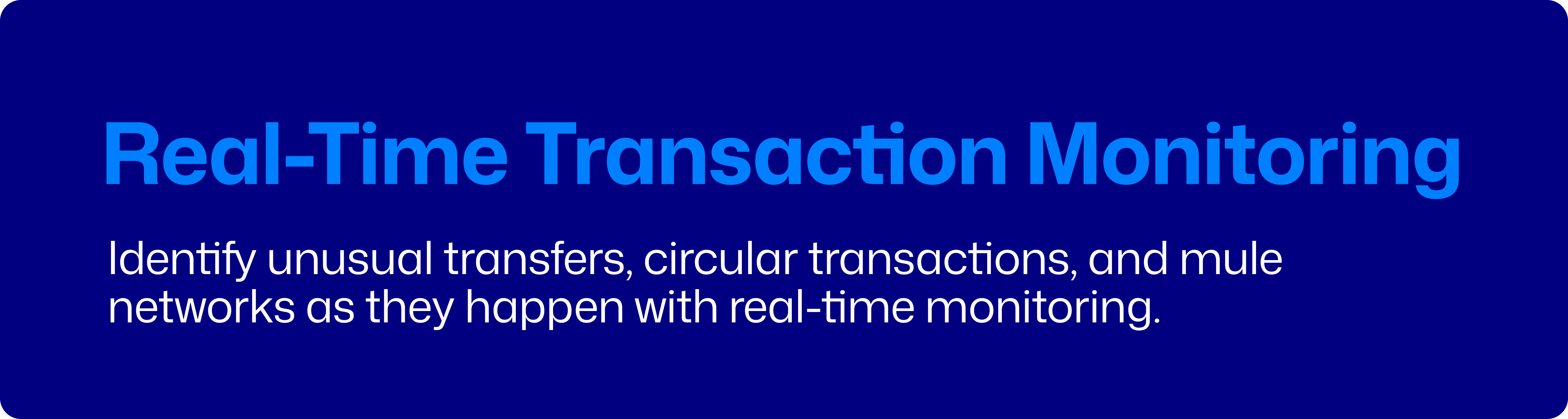
To prevent illegal financing and money laundering, transaction monitoring is critical for crypto exchanges. It’s not enough to verify who is joining your platform; you need to monitor exactly what they are doing. Transaction monitoring tools are built for crypto platforms to track unusual patterns, mule activity, and account takeovers, helping you detect in-platform abuse early and protect both your users and your business.
How it works in practice:
- Monitor transaction behavior for unusual patterns across wallets and accounts – flags transactions that deviate from normal activity or show signs of layering and circular transfers.
- Detecting mule activity and coordinated transfers – identifies linked accounts moving funds rapidly or in structured sequences that indicate laundering.
- Flag account takeovers and suspicious logins – alerts on logins from new devices, unusual locations, or sudden high-value transfers.
Key takeaway: Choose a transaction monitoring tool designed for crypto platforms, as not all systems handle peer-to-peer transfers or high-velocity transactions effectively.
Related: How to choose the right transaction monitoring tool for your fintech
4. Behavioral Monitoring (Detecting Unusual Patterns)
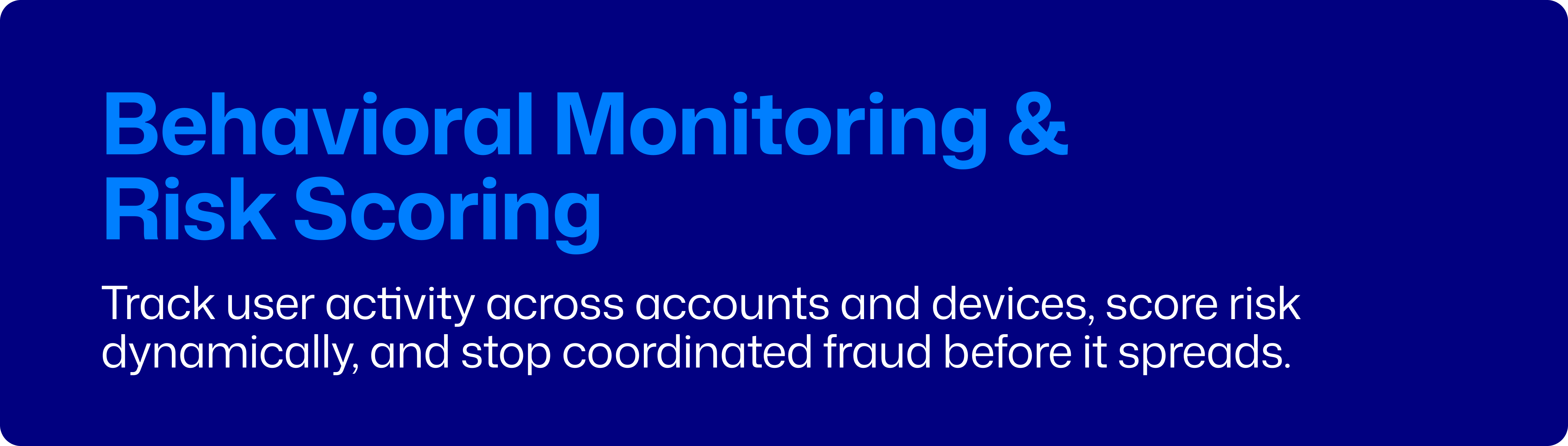
Even after identity verification and AML checks, fraud can persist through repeat or coordinated attacks. Professional fraud rings often create multiple accounts, reactivate dormant wallets, or attempt to bypass controls and mimic behavior patterns. Tracking identities and transactions is just Tier 1; understanding how users behave across devices and accounts is the next critical step.
In the Dojah Fraud Insights Report, Japhet Gana, Head of Fraud at Yellow Card, describes a case where a dormant crypto mule network suddenly reactivated within minutes. By tracking behavior across accounts and devices and applying behavioral scoring, Japhet’s team quickly identified the fraudulent activity and stopped what could have become a multi-country loss.
This highlights the importance of monitoring patterns to detect fraud early. Tools like Profiled Risk, Dojah’s unified fraud detection solution, help you track behavior in real time and intervene before fraud spreads across your exchange.
5. Ongoing Risk Scoring (Dynamic, Continuous User Risk Assessment)
As users and wallets behave differently over time, your crypto platform needs ongoing risk scoring that continuously evaluates account activity and classifies users into risk categories based on your preset fraud rules. This approach lets your team focus resources where they matter most and prevents low-risk users from generating unnecessary alerts.
In the earlier cited report, Olayinka Ajumo, Fraud Manager at Betika, emphasizes: “Every user isn’t equal, so every user shouldn’t be monitored the same.” This underlines the importance of dynamically categorizing users to detect anomalies early and prioritize high-risk accounts for intervention.
Pro tip: Implement a unified risk scoring system that combines identity, AML, transaction, and behavioral signals. This gives your team a single dashboard to view all account data and enables faster fraud decisions.
Crypto Anti-Fraud Solutions at a Glance
Problem | Solution | When You Need It |
| Identity fraud | Multi-step Identity Verification (KYC + biometrics) | During onboarding and early wallet activation, especially if you notice high-value or frequent P2P activity |
| Exposure to high-risk or PEP users | AML Watchlist Screening | When transaction volume spikes or cross-border activity increases
|
| Illicit or unusual transactions | Transaction Monitoring | For high-velocity wallets or if you notice unusual transfer patterns |
| Dormant accounts reactivating | Behavioral Monitoring | When multiple accounts show the same patterns, or dormant wallets suddenly become active |
| Users with dynamic risk profiles | Ongoing Risk Scoring | If your user base sees rapid growth over a short period of time, or needs to prioritize high-risk accounts |
While each solution addresses a specific risk, using them together in a connected system gives your platform a stronger and more proactive defense.
Dojah: A Unified Anti-Fraud Stack for Crypto Platforms in Africa
Crypto fraud in Africa is set to become an even greater threat in 2026, and as a crypto founder or fraud lead, you must be prepared to secure your platform against multiple risks. One of the biggest challenges at this stage is managing isolated tools, each covering only a single layer of defense. This often forces teams to juggle multiple systems, making it harder to spot and prevent fraud before losses occur.
Dojah’s unified anti-fraud stack brings identity verification, AML screening, transaction monitoring, behavioral intelligence, and ongoing risk profiling into a single system. By connecting these layers, platforms gain faster detection, fewer blind spots, and clearer visibility into user risk across the entire lifecycle.
If you’re exploring how to build a resilient fraud prevention system and protect your crypto platform as you scale, speak with the Dojah team to start the conversation.
Frequently Asked Questions on Anti-Fraud Solutions for African Crypto Platforms in 2026
1. What are the biggest fraud risks African crypto platforms face in 2026?
African crypto platforms face growing risks from identity fraud, sanctioned or high-risk users, illicit transactions, coordinated fraud rings, and dynamically risky users. Rapid P2P adoption and cross-border wallets make detecting these threats more complex.
2. Why isn’t basic KYC enough to prevent crypto fraud?
Traditional KYC only verifies identities at onboarding. Fraud often unfolds post-onboarding through wallet activity, transaction patterns, and coordinated attacks. Platforms need tools that monitor ongoing behavior to catch hidden risks.
3. How does AML watchlist screening help protect my exchange?
AML watchlist screening flags users on global sanctions, PEP lists, and adverse media. Continuous monitoring and risk profiling prevent high-risk individuals from using your crypto platform for money laundering or illegal activities.
4. What makes behavioral monitoring different from transaction monitoring?
Behavioral monitoring tracks how users act across devices and accounts, not just transactions. It identifies dormant accounts reactivating, coordinated patterns, and fraud ring activity that traditional checks may miss.
5. How can a unified anti-fraud system improve my platform’s security?
Using all tools together, identity verification, AML screening, transaction monitoring, behavioral monitoring, and risk scoring, creates a connected system. This approach detects complex fraud faster and focuses your team on the riskiest accounts.
Start using Dojah for all your business needs


